
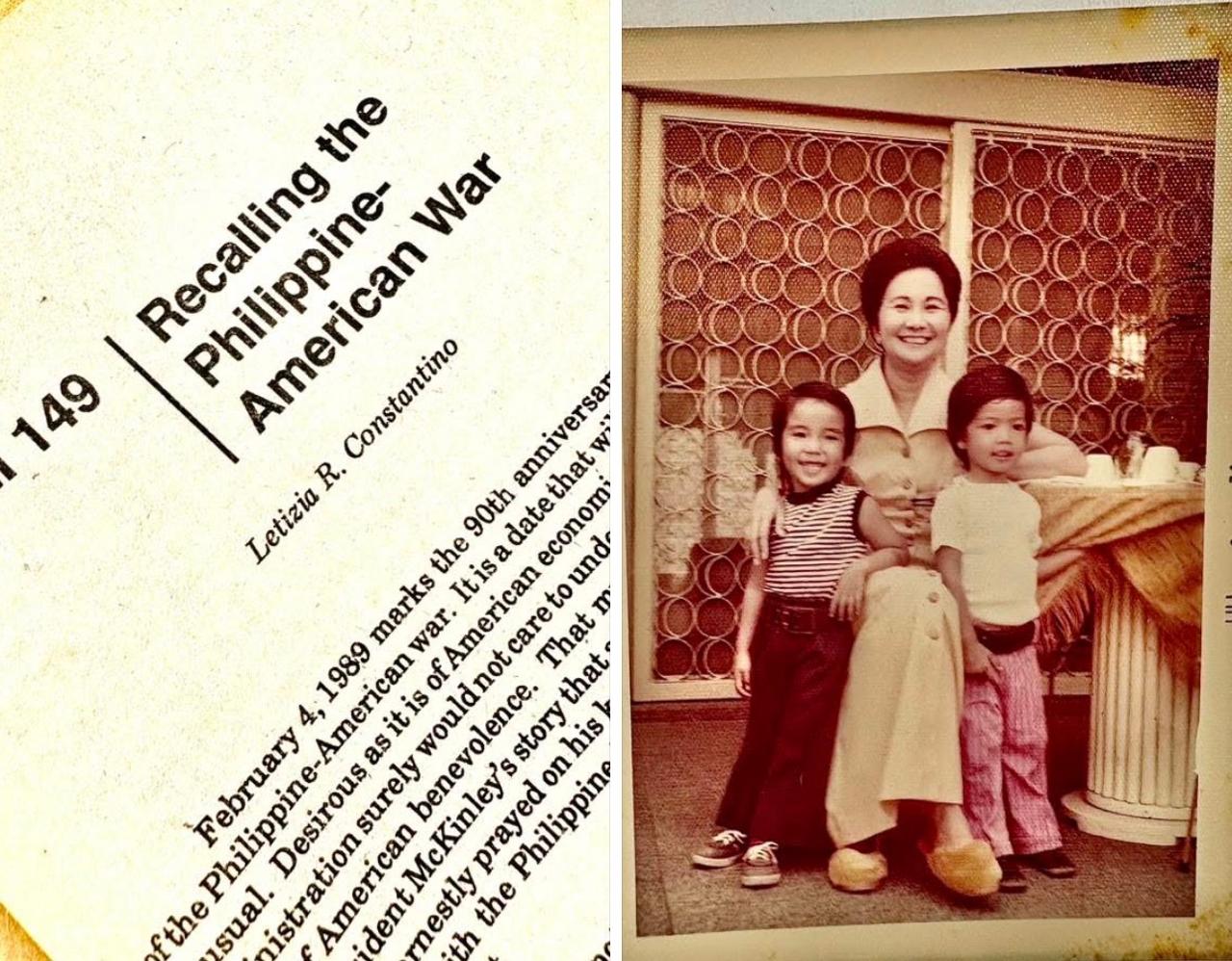
February 4, 2026 marks the 127th anniversary of the beginning of the Philippine-American War, a badly remembered chapter in our history.
We don’t know how many died as a result of the U.S. invasion in 1899. Estimates range from a low 250,000 to as high as one million dead. In a New York Times interview published in May 1901, U.S. Gen. Franklin Bell put the figure of dead Filipinos at 600,000 in Luzon alone. The estimate did not include the slaughter of Samar or ‘pacification’ campaigns in other provinces.
Disregard for Filipino lives was widespread among U.S. troops. For instance, a soldier in the Washington Regiment wrote to his family: “[O]ur fighting blood was up, and we all wanted to kill ‘niggers’ . . . We killed them like rabbits; hundreds, yes, thousands of them.” A private with Utah Battery wrote: “The old boys will say that no cruelty is too severe for these brainless monkeys. . . [T]he boys . . . fill the blacks full of lead before finding out whether they are friends or enemies.” And still, Gen. Arthur MacArthur described it as “the most legitimate and humane war ever conducted on the face of the earth.”
“Why open old wounds?” the historian Letizia Roxas Constantino asked in 1989. Her answer: “In the interest of truth. Filipinos have a right to their entire history; this part of their past was long hidden from them and is not well known even now. Hence, the myth of American benevolence continues to becloud the vision of many Filipinos. Now that we must prepare ourselves to resist another assault on our independence . . . we need to divest our minds of any misguided sense of gratitude arising from a distorted view of our past.”
As Constantino wrote: “The Philippine-American War was a shameful part of American history. It should be a source of pride for us. . . [T]he brutality with which our ‘pacification’ was conducted reflects the fierceness with which Filipinos of that time fought for our independence. The memory of such bravery and patriotism should strengthen us in fighting for the same cause, though under different circumstances.” #RememberBetter
Flanking Letizia: wearing the groovy striped shirt is Red Constantino, and wearing the groovy stiped pants is CP David, from the Constantino Foundation Archives.
References:
Issues Without Tears Volume VIII, ed. Letizia R. Constantino (Karrel, QC-1989)
Joseph L. Schott, The Ordeal of Samar (Bobbs-Merrill Co. Inc., New York-1964)