
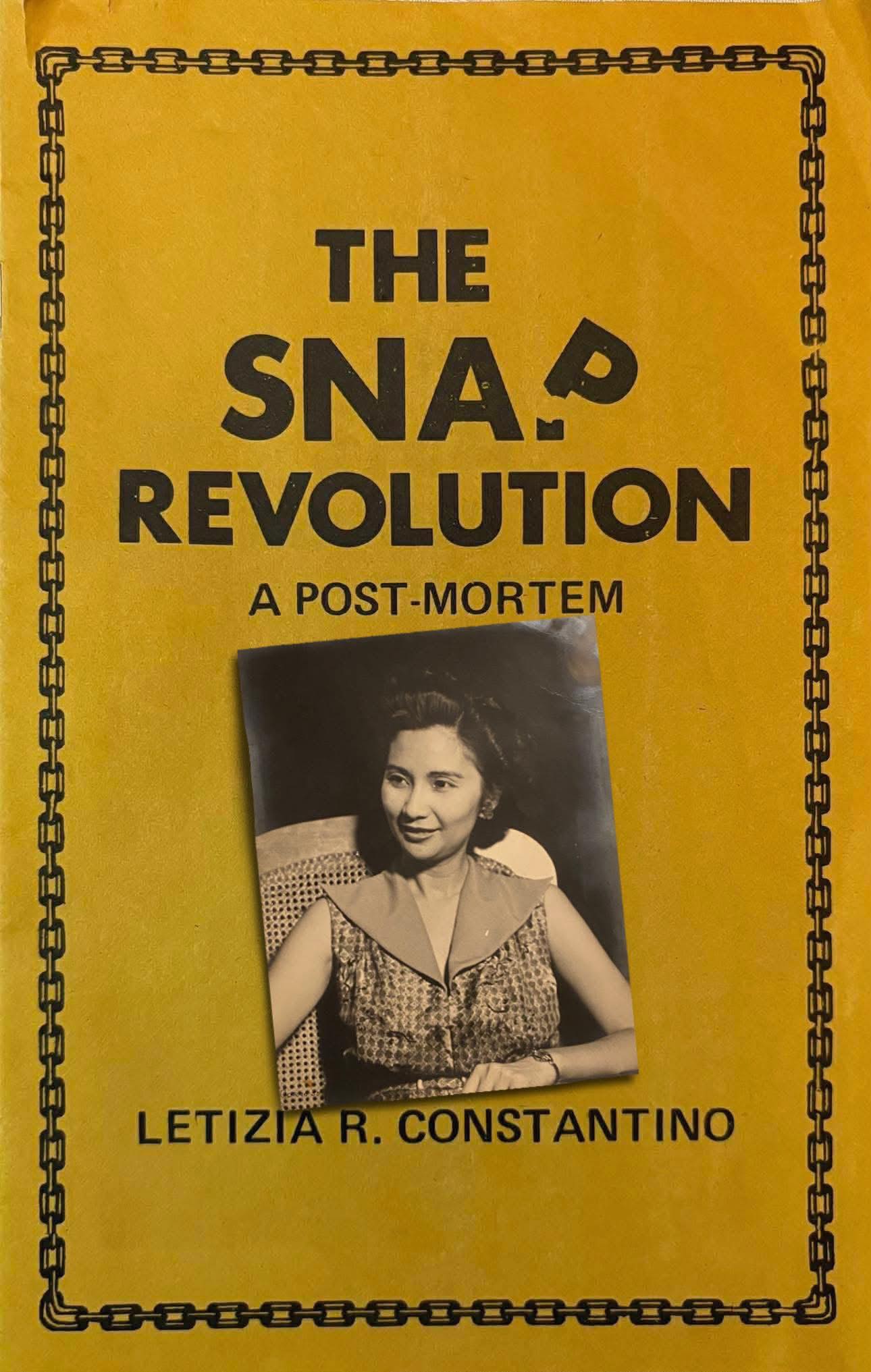
The past is always present, but often concealed or costumed. Letizia Roxas Constantino wrote this in March 1986, less than a month after EDSA:
“The portentous events of February followed one another in rapid succession involving many millions of Filipinos in accustomed actions of commitment and courage and evoking in the whole nation a gamut of strong emotions from fear, dejection, and disgust, to pride and euphoria of victory.”
“Given the dismal 20-year record of the Marcos administration, the opposition did not lack issues. However, it concentrated on corruption, hidden wealth and Imelda’s extravagance, Ninoy’s assassination, and repression and terrorism. When they decried growing poverty and mounting foreign debts, the candidates blamed it all on Marcos, exonerating by their silence the US which had consistently and generously supported him all these years. In short, Sobra na, Tama na, Palitan na was directed at the Maros dictatorship, not the US-Marcos dictatorship. Neither the culpability of the US nor the poverty-and-debt-breeding economic development program was attacked because the opposition was in fact offering more or less the same economic program (to be more honestly and efficiently managed) and it wanted American support. The opposition team stood for democracy but not for nationalism and certainly not for anti-imperialism.”
“People power would not fulfill its potential if it were to limit its concerns to the restoration and enhancement of democratic rights. Above all, people power must be exercised in defense of economic rights and national sovereignty. The people must use their democratic rights to push for basic changes in economic policy. . . [They] must become aware of the real roots of economic exploitation as they have become aware of corruption and political repression. . . People power will . . . become people’s power [when it is] directed by the people themselves. Only then can we truly say that we have won a people’s revolution.”