
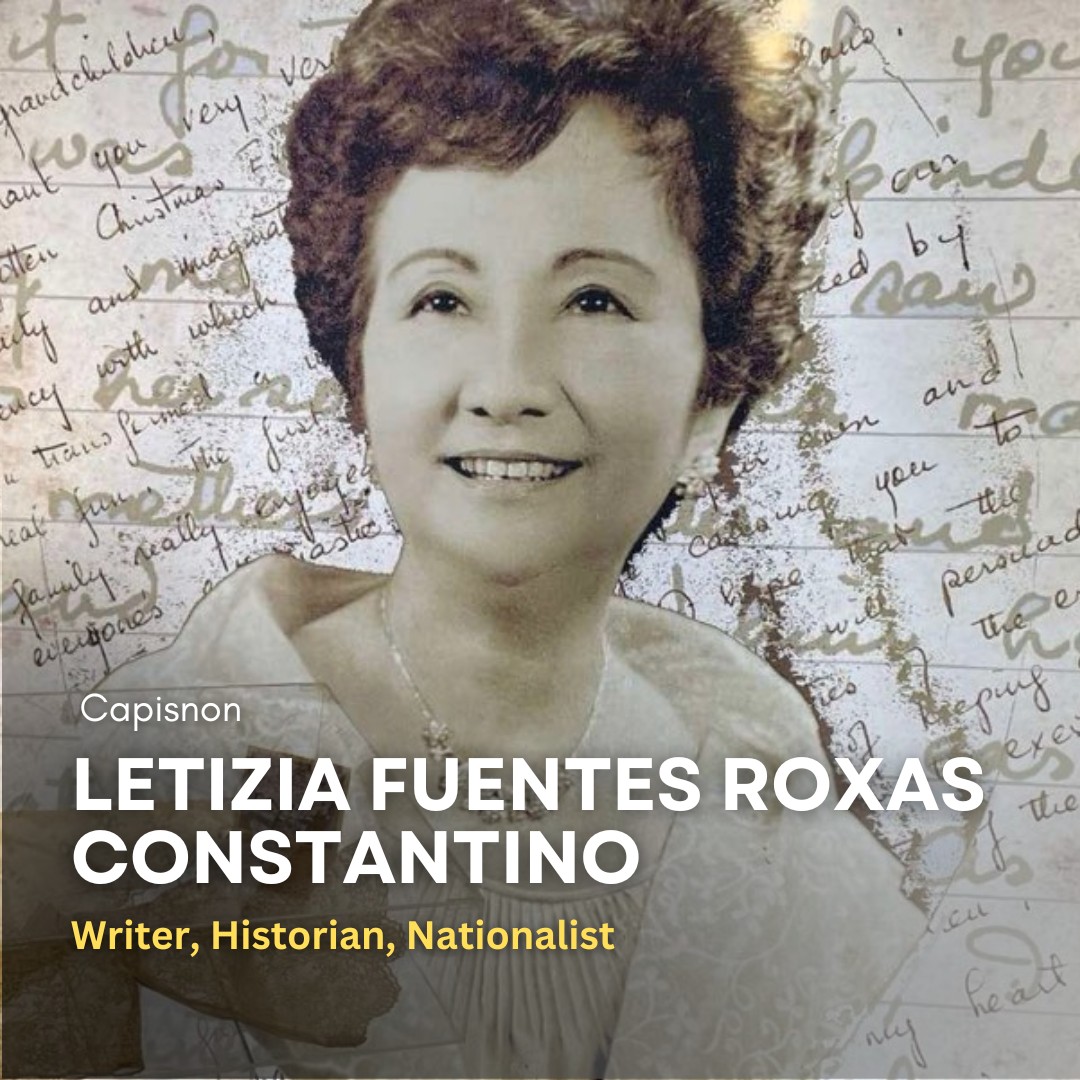
Today, we remember one of the most understated figures in Philippine intellectual history – but no doubt, a proud daughter of the Province of Capiz.
She is Letizia Roxas Constantino, who was born April 9, 1920, to Mamerto Acuna Roxas and Mercedes Fuentes. Both parents hailed from the town of Capiz (now Roxas City). Mamerto Roxas was the older brother of President Manuel Roxas, while Mercedes Fuentes was the older sister of National Artist for Music, Jovita Fuentes.
Letizia Roxas was married in 1943 to nationalist historian Renato Constantino. With him, she devoted her life to scholarship, writing, and the pursuit of a deeper, more authentic understanding of the Filipino identity.
Working closely with her husband, she co-authored seminal works such as “The Philippines: A Continuing Past,” a textbook that challenged colonial interpretations of history and promoted a nationalist perspective.
She also published a series of pamphlets under the title “Issues Without Tears,” which came in seven volumes. These pithy essays were meant to help schoolteachers explain to their students the crucial issues facing the country and the world today.
Letizia and Renato’s collaboration helped reshape how generations of students and scholars view the Philippine past, emphasizing critical thinking and cultural self-awareness.
Beyond formal publications, Letizia was known for her extensive letters and essays, which reflected her sharp intellect and deep concern for the nation. Her writings often explored themes of identity, history, and social responsibility, offering insight into the evolving Filipino consciousness.
Despite her significant contributions, she maintained a low public profile, preferring a life of thoughtful reflection and intellectual engagement, earning her recognition as a “generational Filipina,” a symbol of dignity, resilience, and patriotism.
Letizia Roxas Constantino passed away on June 27, 2016, leaving behind a legacy rooted in scholarship and national consciousness. Her work continues to inspire historians, educators, and students to approach Philippine history not just as a record of events, but as a living narrative shaped by the Filipino people themselves.
Text by Christian George Acevedo