
by Red Constantino
All the tools available to you, use them, and use them for the greater cause of national freedom and social liberation. Decolonize. Words often said by Letizia before she passed away in 2016. We did a lot of the first point last Saturday at the convocation for Renato Constantino, and likewise discussed in different details the second point, because we cannot completely decarbonize without full decolonization, and without decarbonization we cannot fully decolonize.
Much was shared by the speakers, but UP College Media and Communication (CMC) Dean Diosa Labiste framed a lot of narratives early when she spoke of the long overdue review of Renato Constantino’s contributions as a journalist.
We talked briefly before the event formally began as Dr. Labiste recounted The Manipulated Press, a book by one of the speakers, Rosalinda Ofreneo, published in 1984 with an introduction by Constantino. I mentioned The State of the Philippine Press, also with an introduction by Constantino, published based on in-depth debates and proceedings among media convened by the National Press Club in 1983. We laughed when I shared some of the frequently mentioned canards by people who were sensitive about turf. Some call them gatekeepers, stay-in-your-lane folks who were – are – often hilariously territorial. In the Department of History, I said the line was “Constantino is just a journalist!” but I said I’ve also encountered dismissals from the other end muttering, “What does a historian know about journalism?!”
But even Marx was a journalist, said Dean Labiste. And she’s right. Again, use everything in the toolbox.
It is possible three books might come out in the future, thanks to the event in UP CMC. Two seem most likely – a reprint of The State of the Philippine Press, with a new introduction by Dean Labiste, which might weave a selection of essays from The Manipulate Press and other pieces on journalism.
The other is a Festschrift, a book of writing in honor of Renato Constantino by the Journal of Contemporary Asia, led by the event’s first speaker, Dr. Rajah Rasiah, who spoke of his encounters with Constantino. Dr. Rasia heads the Asia-Europe Institute of the Universiti Malaya, and opened with a statement by Constantino he said he could not forget. In 1986, Constantino told him the replacement of Marcos came with an opening up of political space but that it was largely a restoration of (stable) elite rule, and it has set back the country’s development by at least two decades.
The next speaker was UP Professor Emerita Dr. Rosalinda Ofreneo, a former dean, a poet, and a much loved and widely respected feminist. She spoke of her friendship and comradeship with Renato Constantino and Letizia Roxas Constantino and the partisan scholarship embodied by the couple and the work. Her remarks were particularly moving, because it was personal, and likewise clearly political. Tita Inday was eloquent as always, providing distinct frames that allowed the audience to understand better the milieu of Renato and Letty and the impact of their works on many generations, hers included. Before she ended her talk, she read a poem she wrote for Renato, which the foundation hopes to publish later along with her poem, To Letizia C @ 95.
The next speaker was Prof. Bernard Karganilla, who lost his voice days before the event. He wrote a paper for the convocation, read by the scholar Lakan Uhay Dorado Alegre as Karganilla sat on the long table for the panelists. Karganilla focused on Constantino as writer, witness, and maker of history and his time as a combatant who fought in the trenches of Bataan and later the clandestine intelligence service while the Philippines was occupied by fascist Japan. Alegre read quotes selected and woven together by Karganilla, which showed Constantino’s detailed understanding of U.S. imperialism and Japanese fascism with remarkable prescience and clarity. Karganilla is the corporate secretary of the Hunters-ROTC Historical Society and coordinator of UP Manila’s Masters of Management Program.
Next to speak was Dr. Rene Ofreneo, Professor Emeritus of the UP School of Labor and Industrial Relations (SOLAIR). Dean Rene discussed the element behind the continued industrial acceleration of our neighbors in Asia and Southeast Asia while the Philippines falls further and further behind, which is nationalism. Ofreneo covered the importance of national industrial policy changes in the first three decades after the world anti-fascist war of the 1940s, and they way they were cemented with the post-Marcos restoration of elite economics. Ofreneo dissected pronouncements of economic managers determined to strip nationalism from the country’s economic development strategy while trusting in the power of the market and competition. The result – deindustrialization, import dependence, slow growth, unstable jobs, the rise of the informal labor sector with intensifying export of labor, and the normalization of ‘endo’ approaches to employment.
I spoke last. I said we could dwell on Renato and Letty and how far ahead of their times their thinking was. For instance, that Renato was already recommending the energy transition to solar, wind, geothermal, and hydro as early as 1979 – to protect the economy against the very volatility that is now hammering working Filipino families, with fossils as internationally traded commodities. But I gave a number of examples instead of how Renato and Letty focused on the concept of a usable history and the way their narratives reflected their belief in the sense of agency working people – so long as they are imbued with a strong sense of history. I tried to show instances where the foundation challenged common notions of heroism and the meaning of “revolutionary.” Ultimately, I showed how intricately linked the climate crisis was with Philippine history, in ways that reimagine what sovereignty means alongside the rise of Philippine history-rooted nationalism and the implications the US-Israel war on Iran and the Philippines and Southeast Asia at the center of what is among the earliest international armed fossil-fired imperial resource grabs.
It was followed by a fascinating Q&A with the audience – the UP CMC auditorium was standing-room-only – with a ton of young folks asking really sharp questions, ranging from literature, leadership, economic nationalism, the Diliman Commune, and the nature of imperialism. The entire event was ably moderated by George and Vin, two brods of the Alpha Phi Beta fraternity, which counts Renato among its founders. Alpha Phi Beta helped co-organize the event with UP CMC, the Constantino foundation, and the Asia-Europe Institute of Universiti Malaya.
A lot of people bought books and tote bags at the registration booth, and it was followed by a small dinner at the ancestral home of Renato and Letty in Panay, hosted by Lourdes Constantino.
What’s the takeaway from last Saturday? More projects ahead. More partnerships in the near future. And more history coming our way, all of which, together, represent ways Renato and Letty would want to be honored.
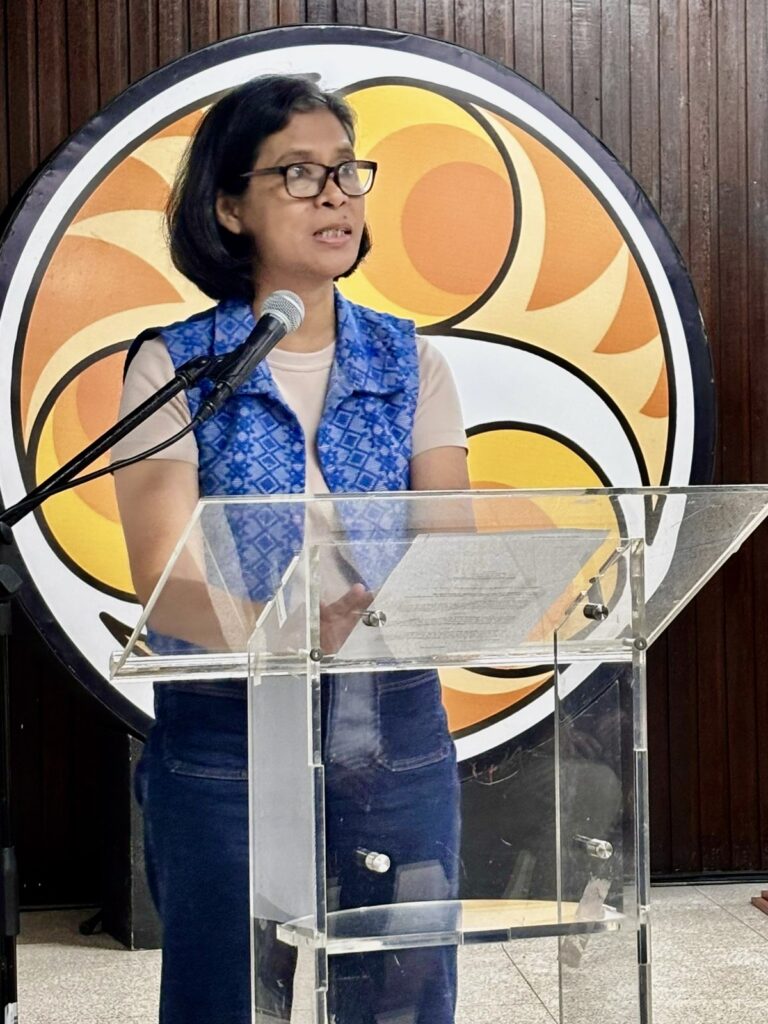
UP CMC Dean Diosa Labiste sets the intellectual framing of the forum, centering the long-overdue recognition of Renato Constantino's contributions as a journalist — and the ongoing relevance of his work to contemporary media and national liberation discourse.
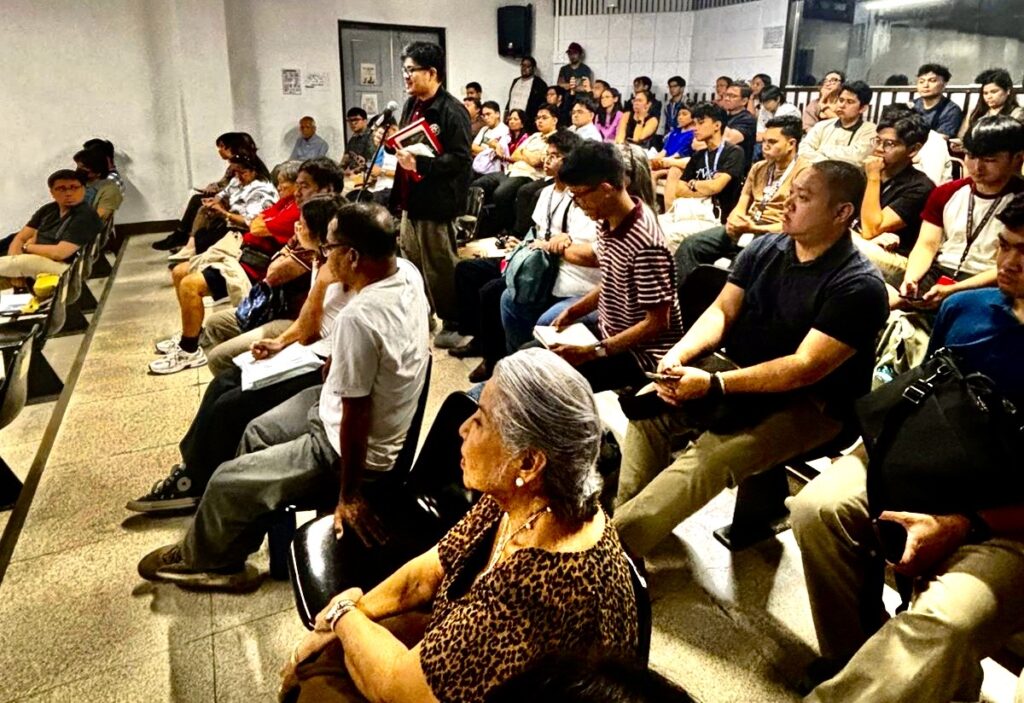
A full house at the UP CMC Auditorium as participants engage in a lively open forum during "Renato Constantino Revisited," held at Plaridel Hall Annex on April 18, 2026.
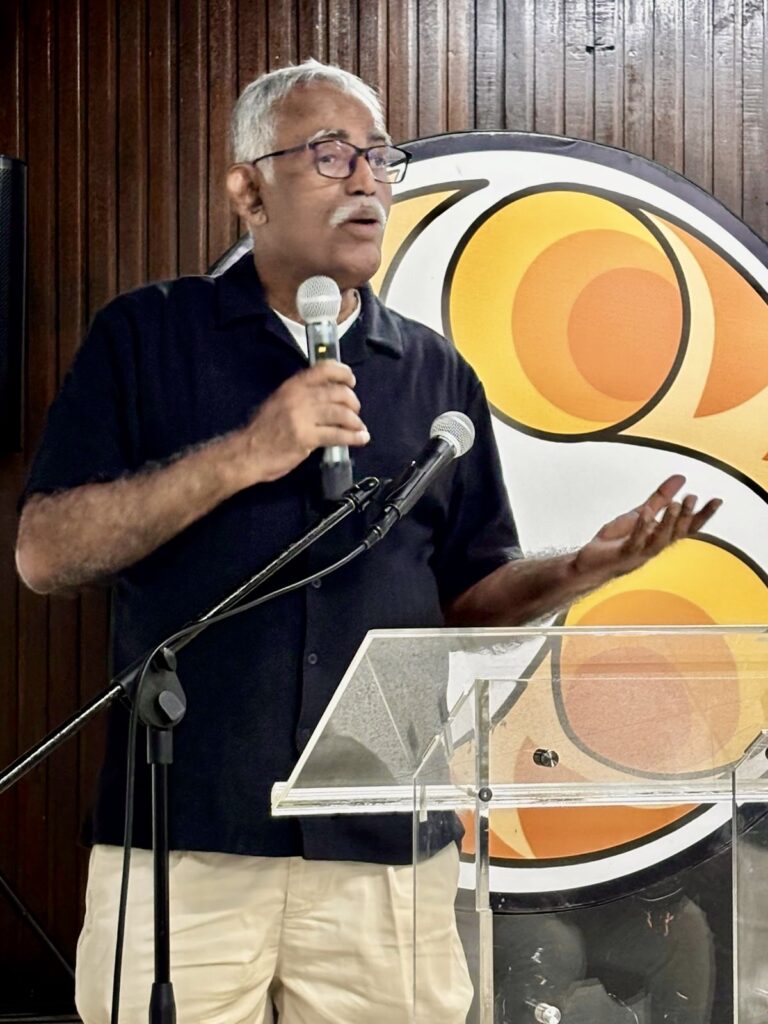
Dato' Dr. Rajah Rasiah, Executive Director of the Asia-Europe Institute, Universiti Malaya, speaks on the relevance of Renato Constantino and the enduring work of the Journal of Contemporary Asia with regard to development and peace in Southeast Asia.
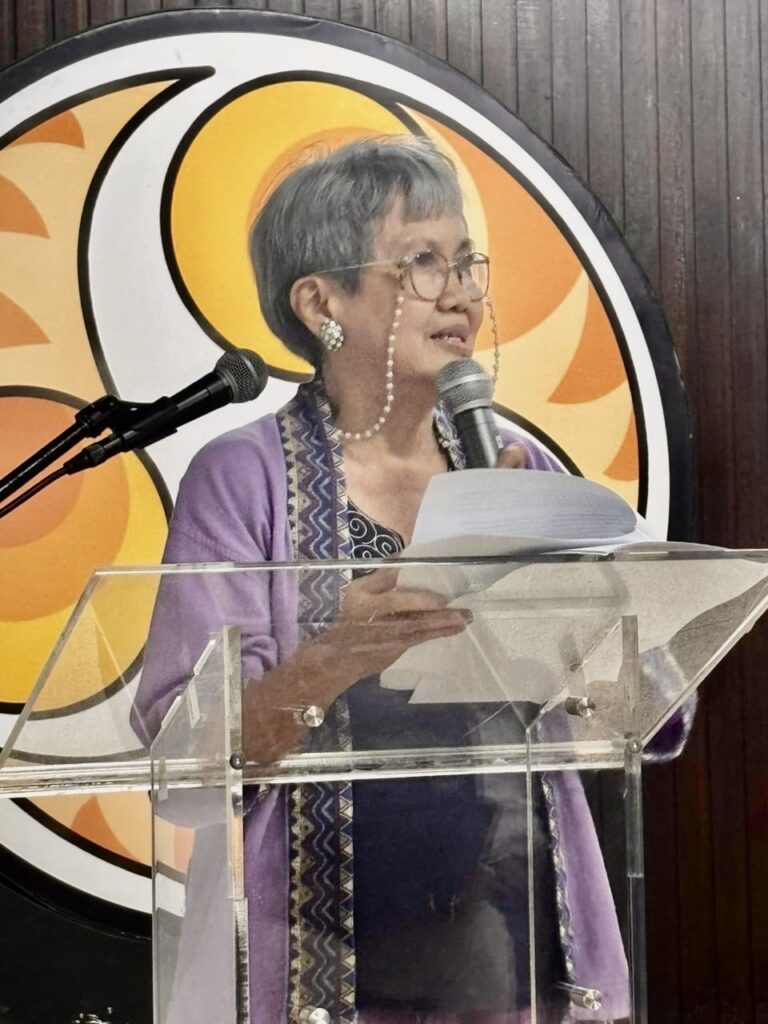
UP Professor Emerita Dr. Rosalinda "Inday" Ofreneo delivers a deeply personal and political tribute to Renato and Letizia Constantino, drawing from decades of friendship, comradeship, and shared partisan scholarship — closing with a poem she wrote in Renato's honor.
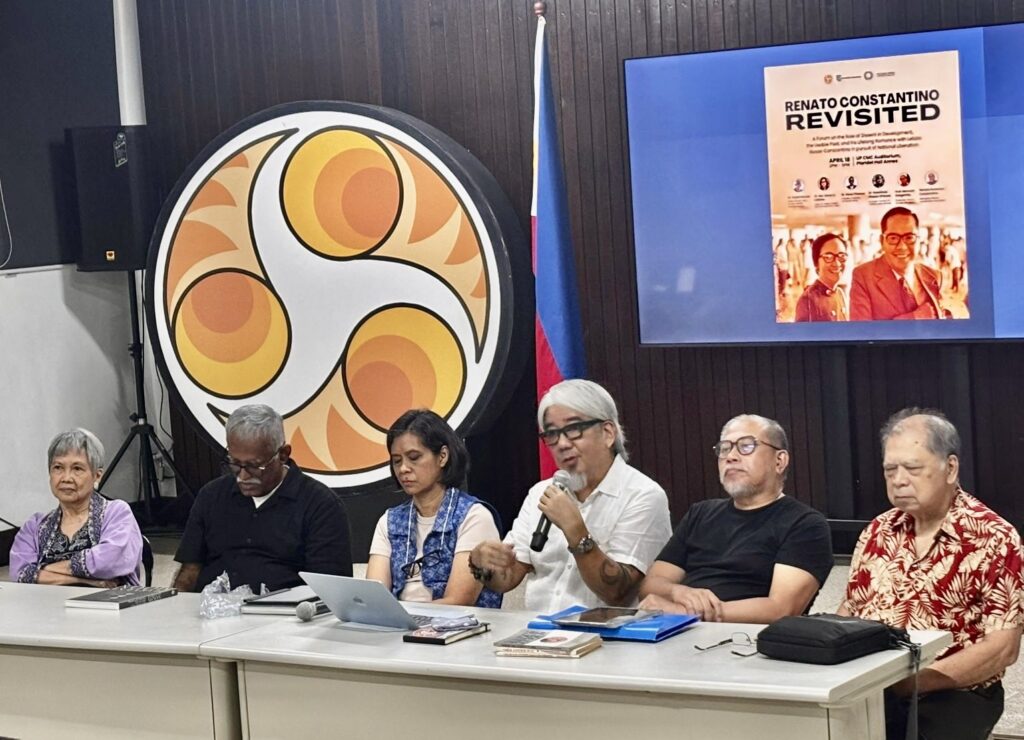
Speakers and panelists come together to revisit Renato Constantino’s legacy and its implications for contemporary Philippine and regional issues.