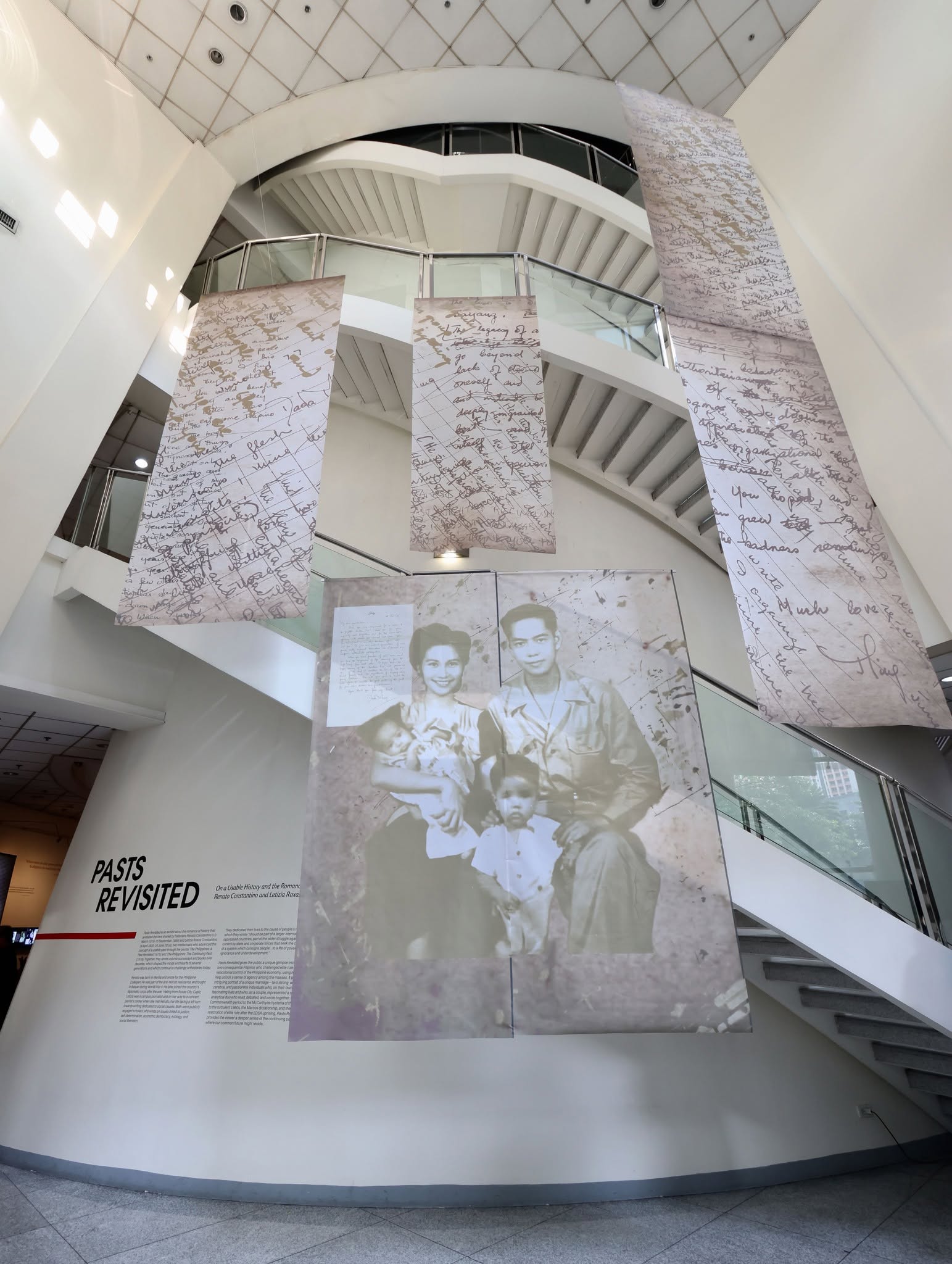
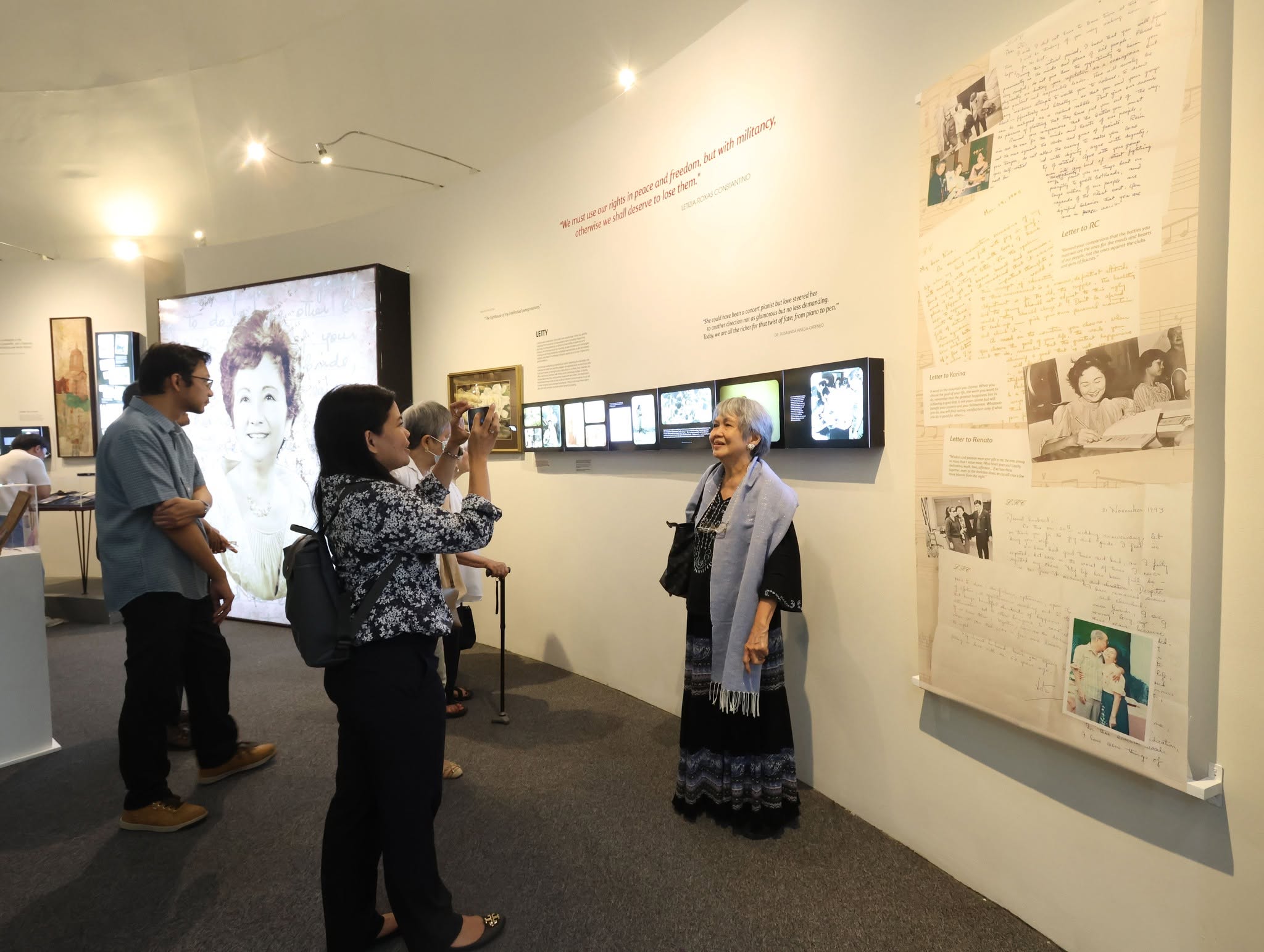
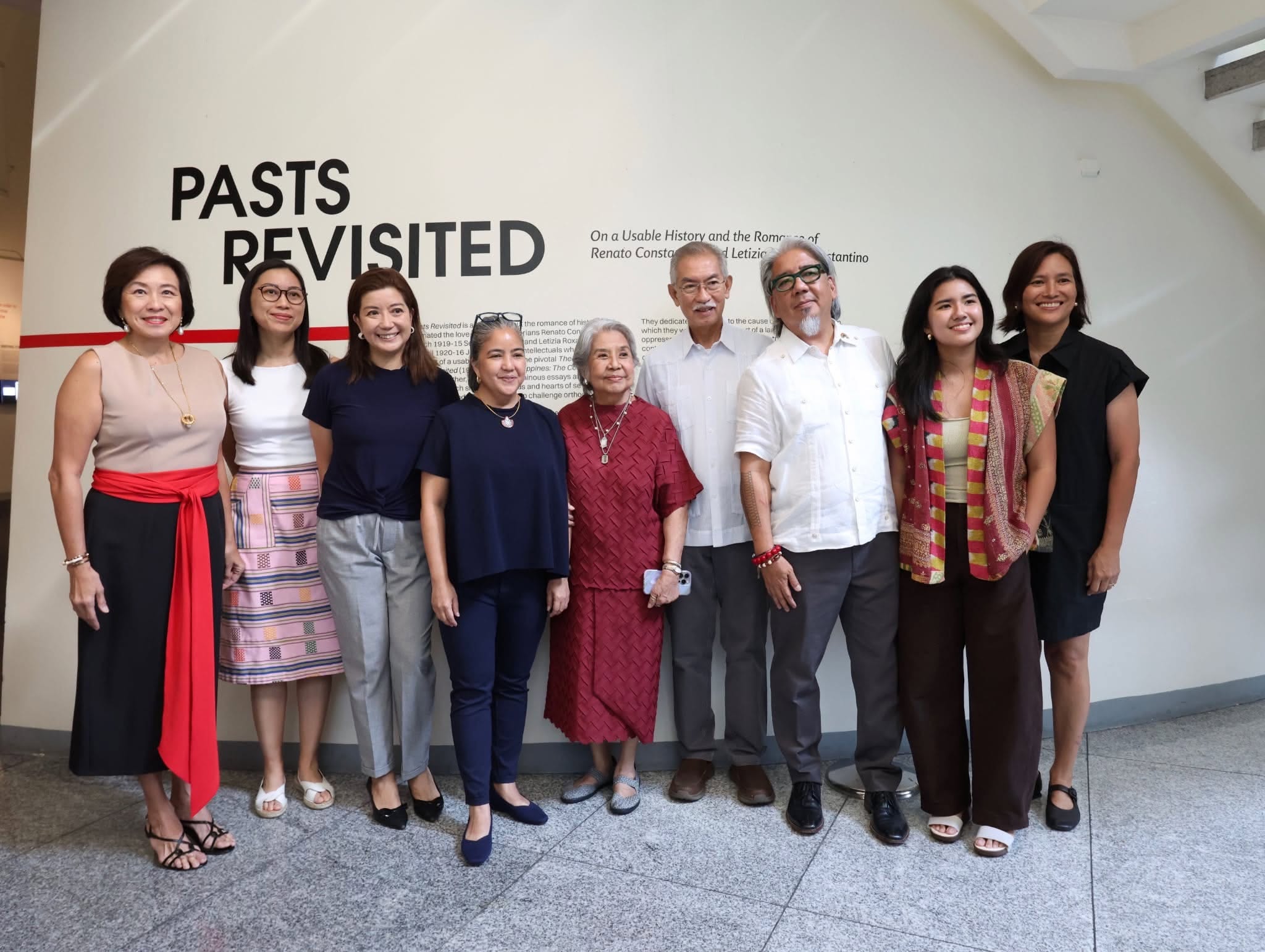
We present today the Malaya column of UP Manila's Prof. Bernard Karganilla, whose words one can see prominently on the wall of the Pasts Revisited exhibit at the Yuchengco Museum: "Renato Constantino was a combatant in the anti-fascist world war, a journalist, and a historian. He made history, witnessed history, and wrote history." Karganilla would know; he was a long-time student of Renato as well as Letty, and he became a much loved friend of the two historians.
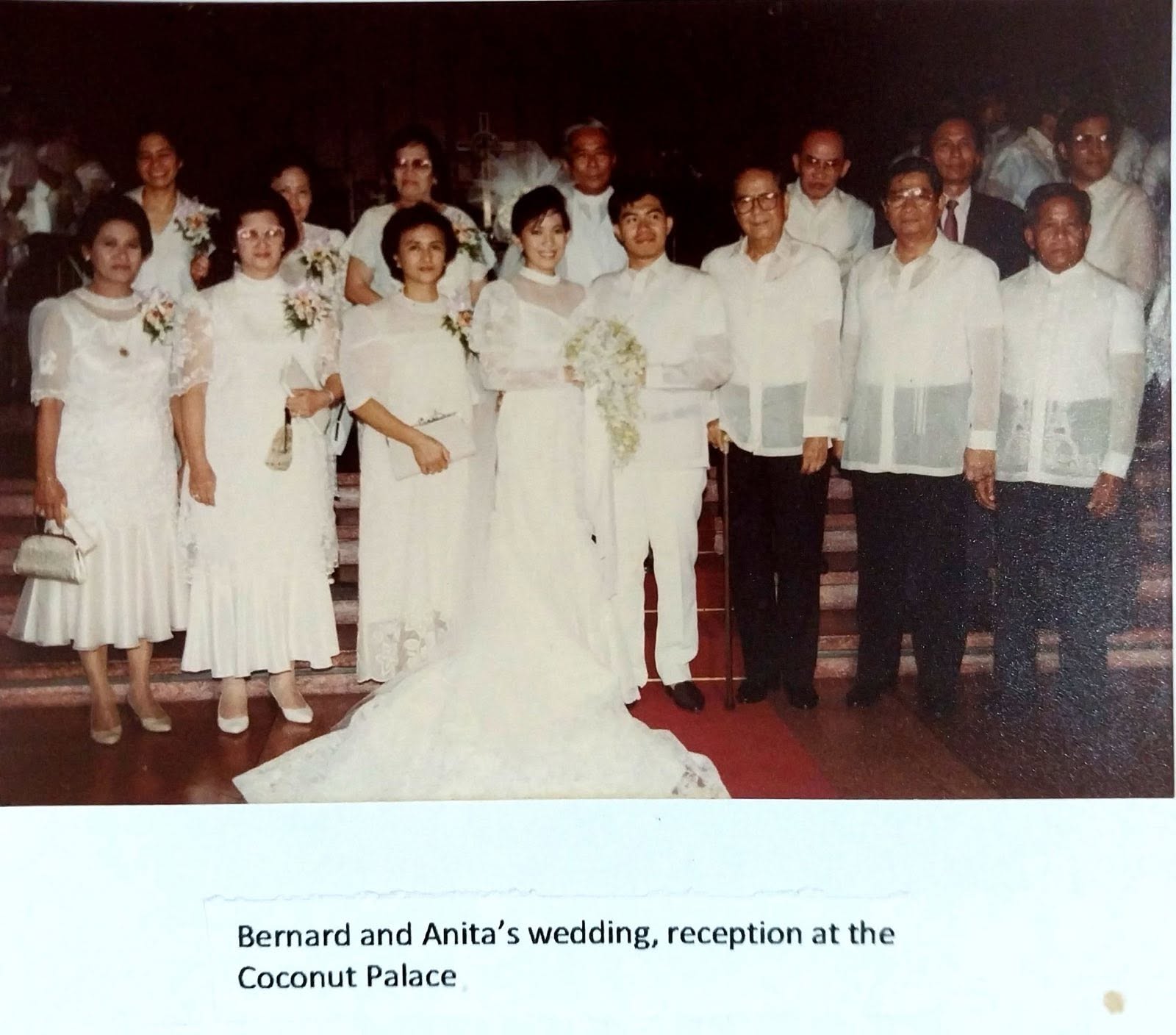
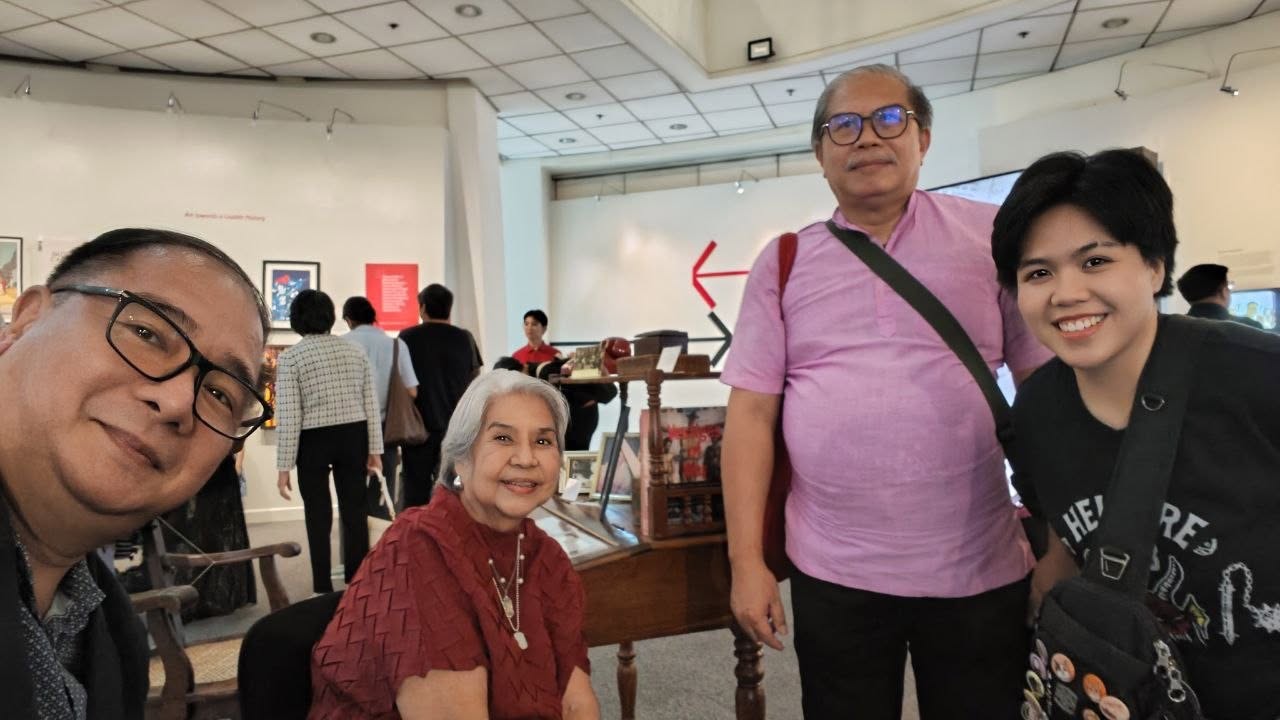
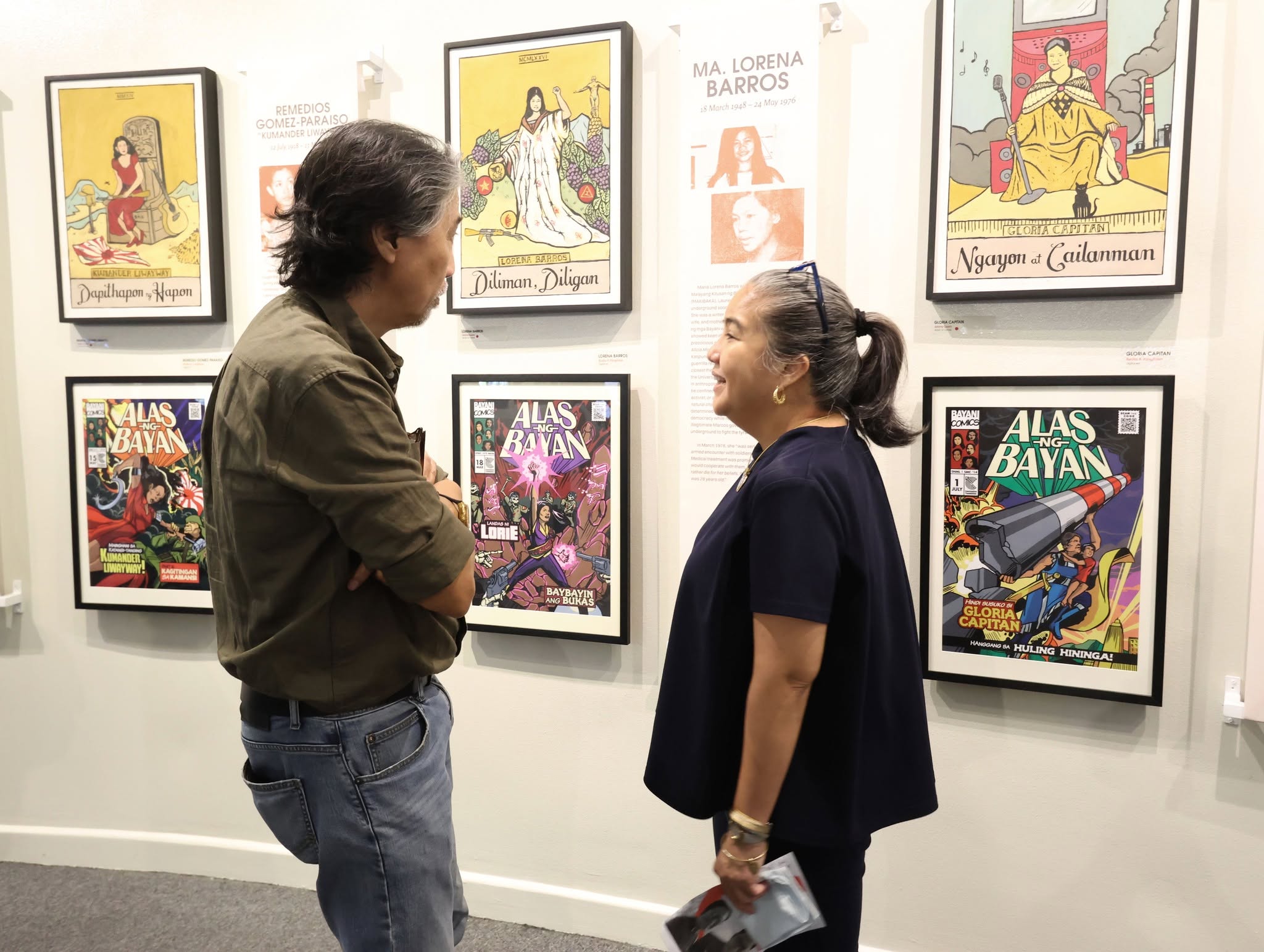
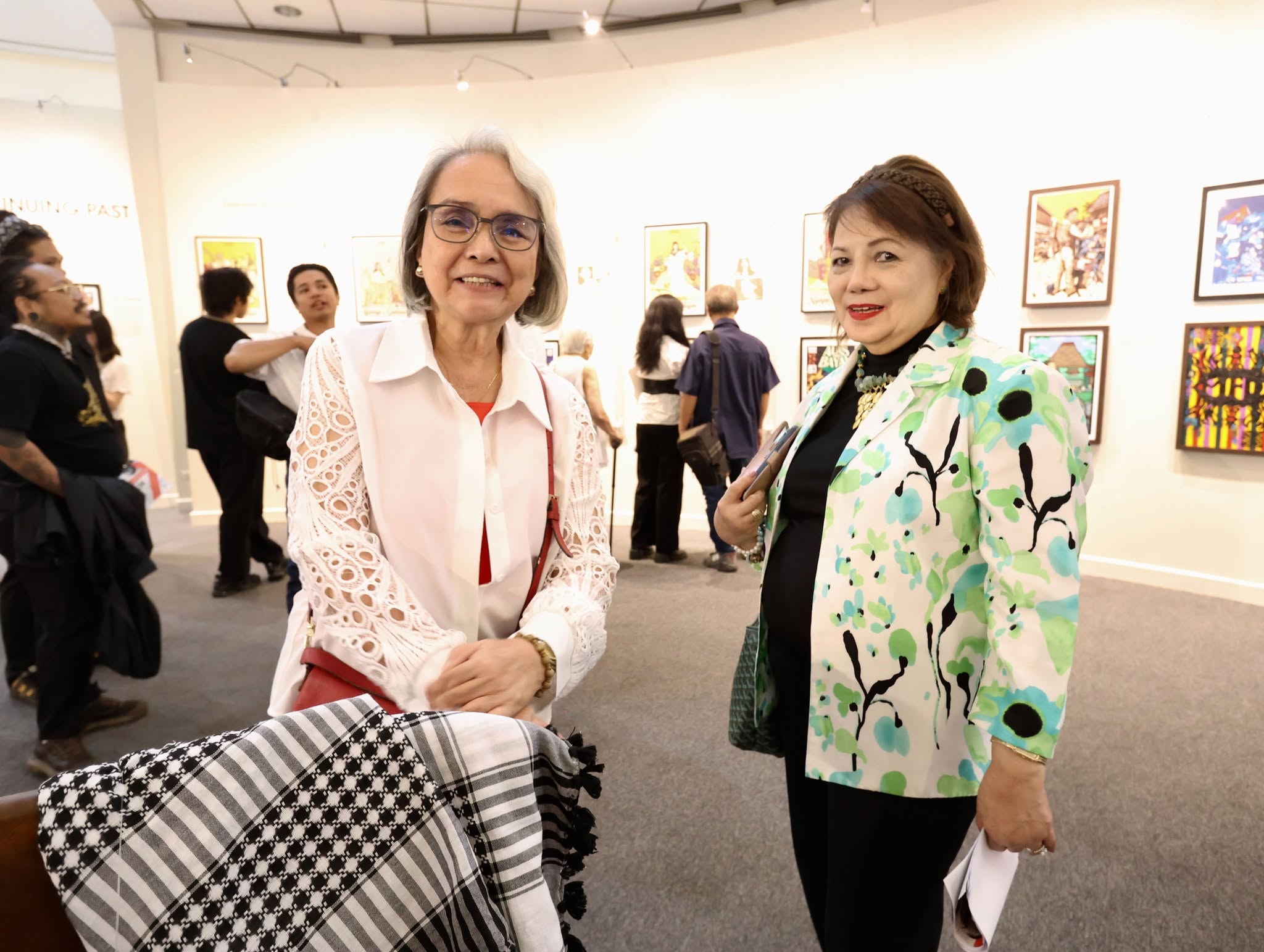
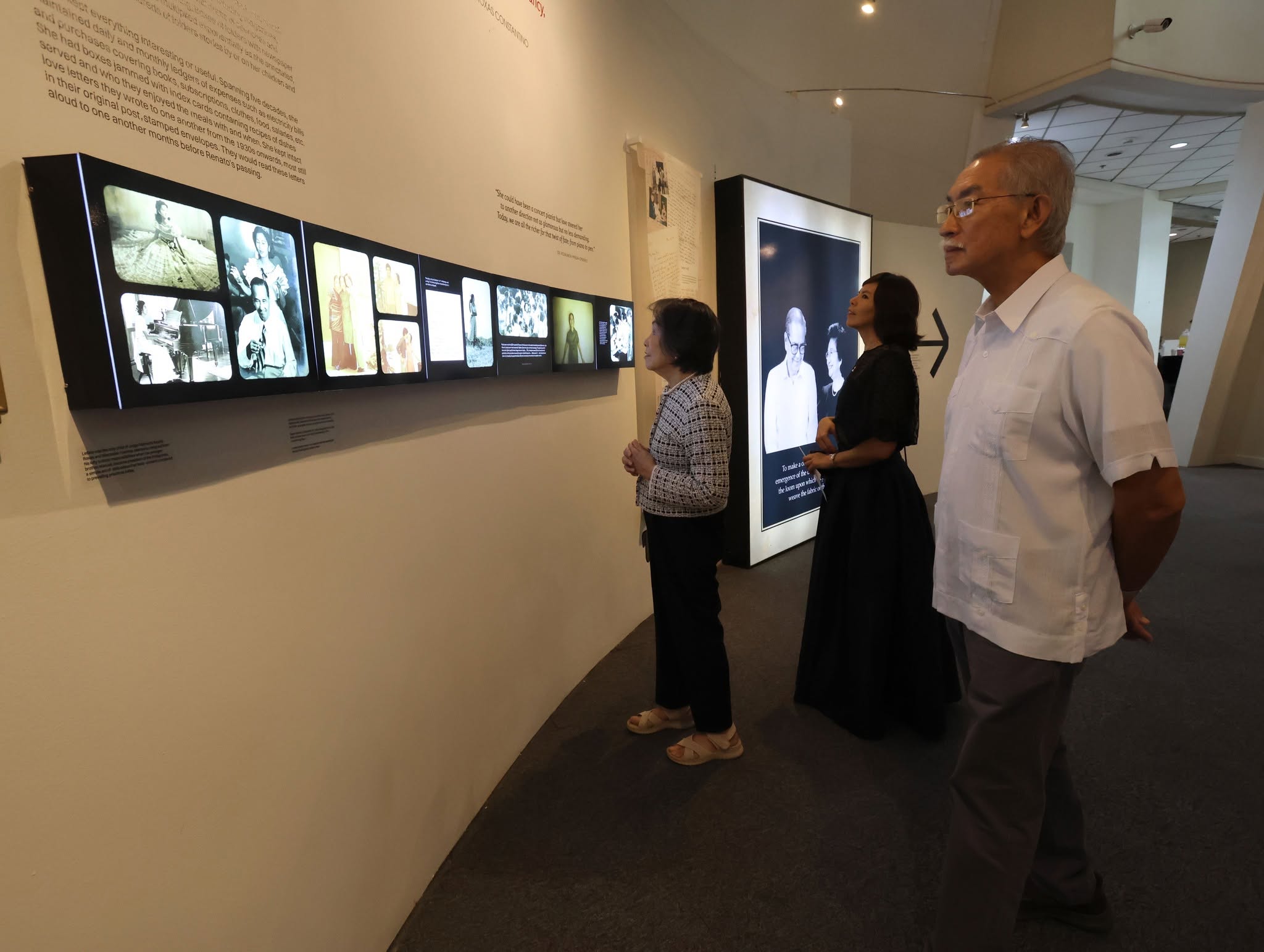
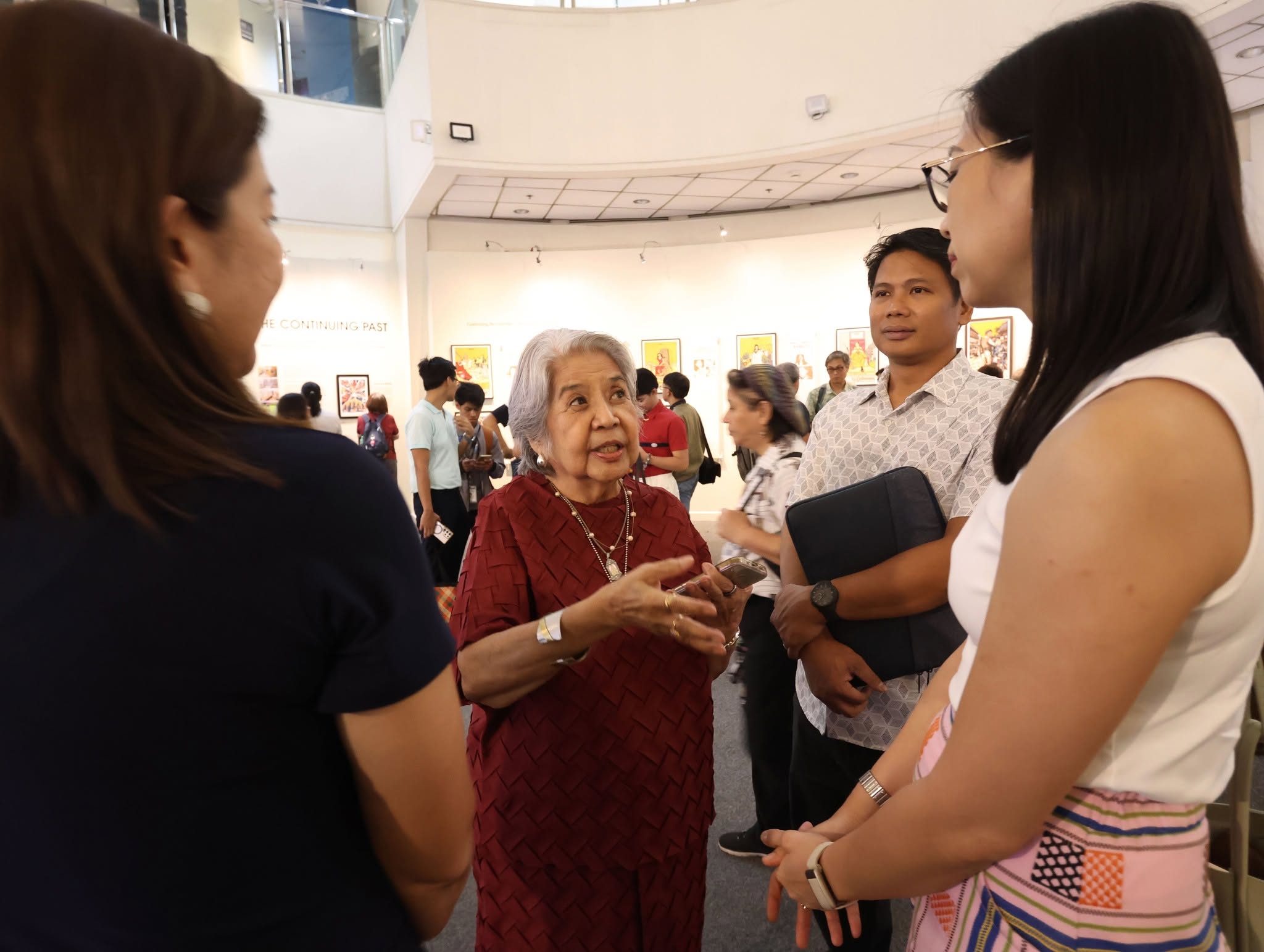
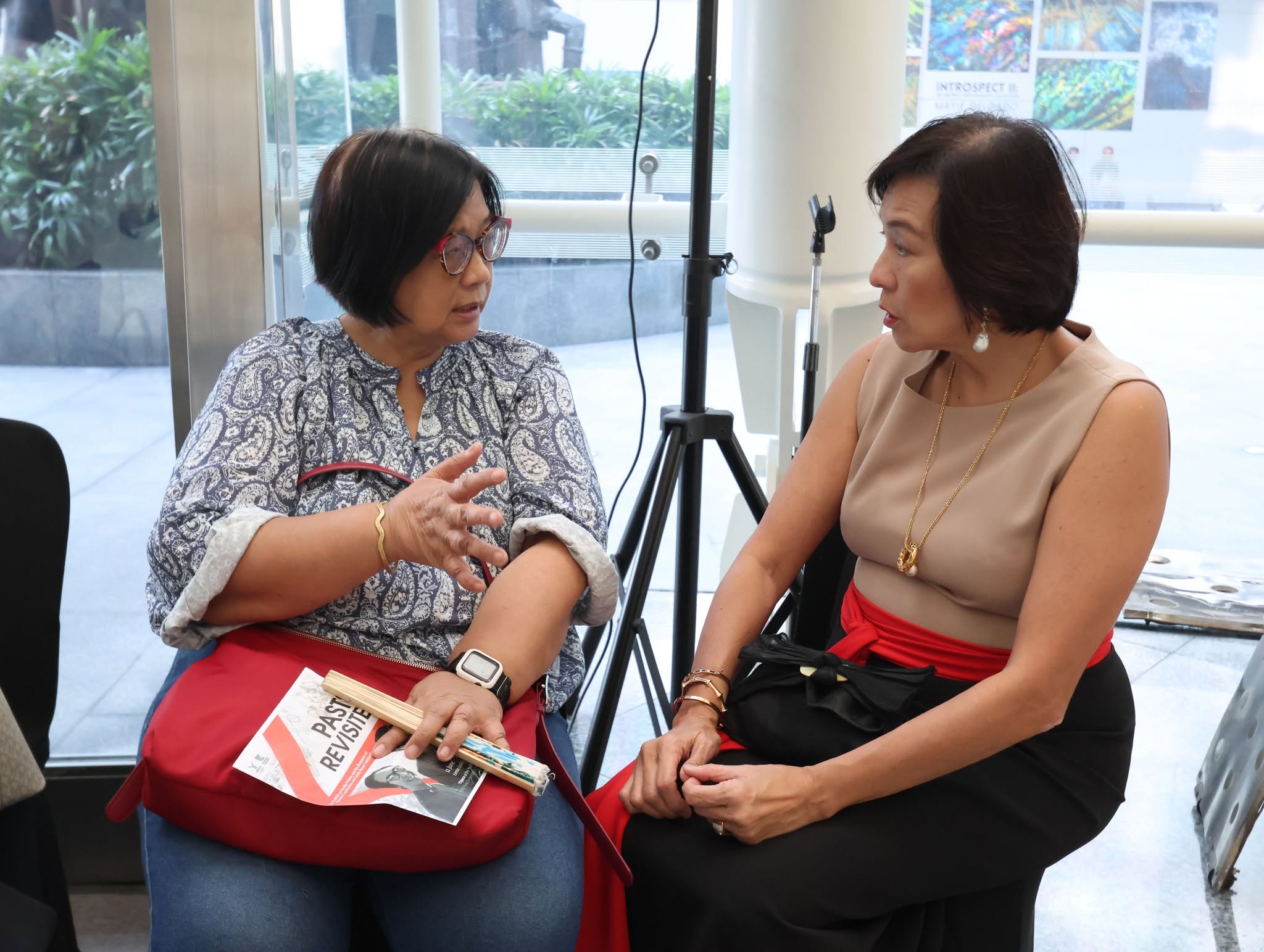
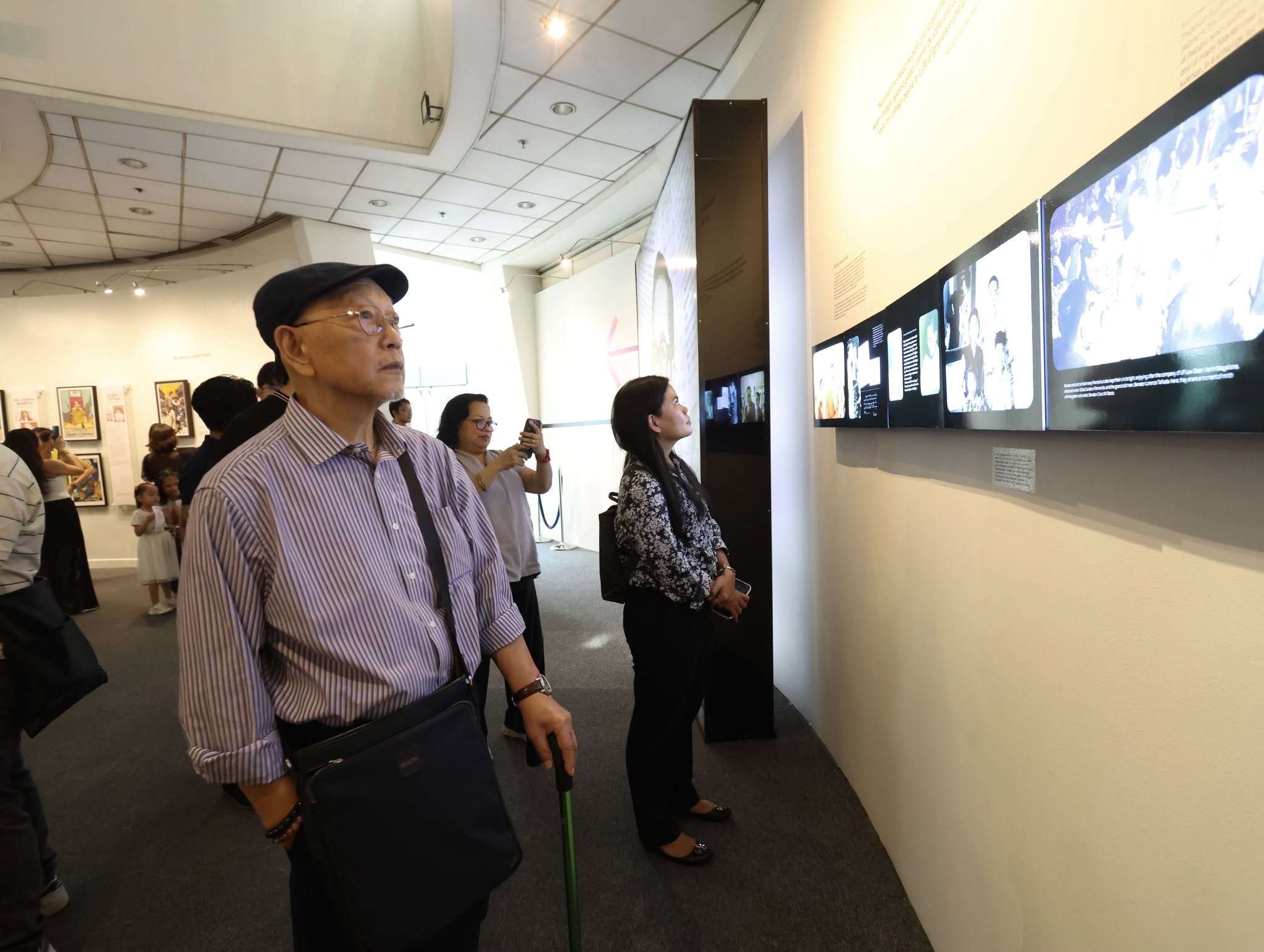
With Prof. Karganilla's words we feature as well as his wedding photo, with his late wife, Anita, who was much loved by the Constantinos, a love that extends to the second and third generations. In the wedding pic, Renato Constantino is standing to the left of Prof. Karganilla. In the other photo is history scholar Prof. Raymund Ciriaco, who was likewise one of Renato's students, the writer and activist Dudi Balderrama Constantino, who oversees and helps support the executive agenda of the Constantino Foundation, and Maleah Karganilla. Featured as well are other photos from the opening, featuring a ceremonial pose, National Artist Virgilio Almario, and businessman Candido Dizon. Enjoy.
QUALITY AS DUTY
Bernard Karganilla, Time Travel, Malaya, 10 June 2026.
We are a QA University. Thus declared Atty. Angelo A. Jimenez at the first UP System Quality Assurance last08-09 June 2026 at the Philippine International Convention Center. The President of the University of the Philippines System contextualized his declaration within the polycrisis, a volatile, uncertain, complex and ambiguous world, which refers to the "interconnected nature of the threats facing humanity today, from global warming, pandemics, and extreme inequality to democratic erosion and armed conflict," according to the United Nations Development Programme.
The UP President was correct when he urged the two-day system-wide gathering to imagine a decolonized University. The process, as your columnist sees it: "History should be understood as the product of human choices and actions, not merely as a series of recurring events in which human beings are passive victims. The world in which we live today is the material representation of the human mind, shaped by thoughts and a constrained sense of identity. We are the shapers and the only ones responsible for crafting what we define as the seamless sequence of time: past, present and the future." [Challenging Polycrisis in Organizations: New Narratives, Responsible Leadership and Humanistic Management. Cham, Switzerland: Palgrave Macmillan, 2026, p. vii]
In fact, I refer to the UP President this editorial that won for the editor (Renato Constantino) first place in the College Editors Guild contest for campus journalism, 27 February,1940: "The intellectual class with few exceptions has not shown enough interest in the welfare of the lower strata. They are inclined to take the masses for granted—to be indifferent to them to the point of considering the mass negligible element in the nation's life. This erroneous notion should be rectified. We might as well ask ourselves—does university education keep one far above the masses or in the service of the masses? Are University graduates made sensitive to the sad plight of the poor masses so as to encourage them to sympathize with these people and utilize their university training in ameliorating their conditions? We need more conscious efforts to wrest the poor and the ignorant from the clutches of the agitator, the usurer, the unscrupulous landlord and any other undesirable element that foment their minds with more discontent…How this sympathetic attitude towards the masses can be developed among our intellectual elite is one of the missions of the University." [Vintage Constantino (2000) "The university and the masses," Journal of Contemporary Asia, 30:3, 412-413]
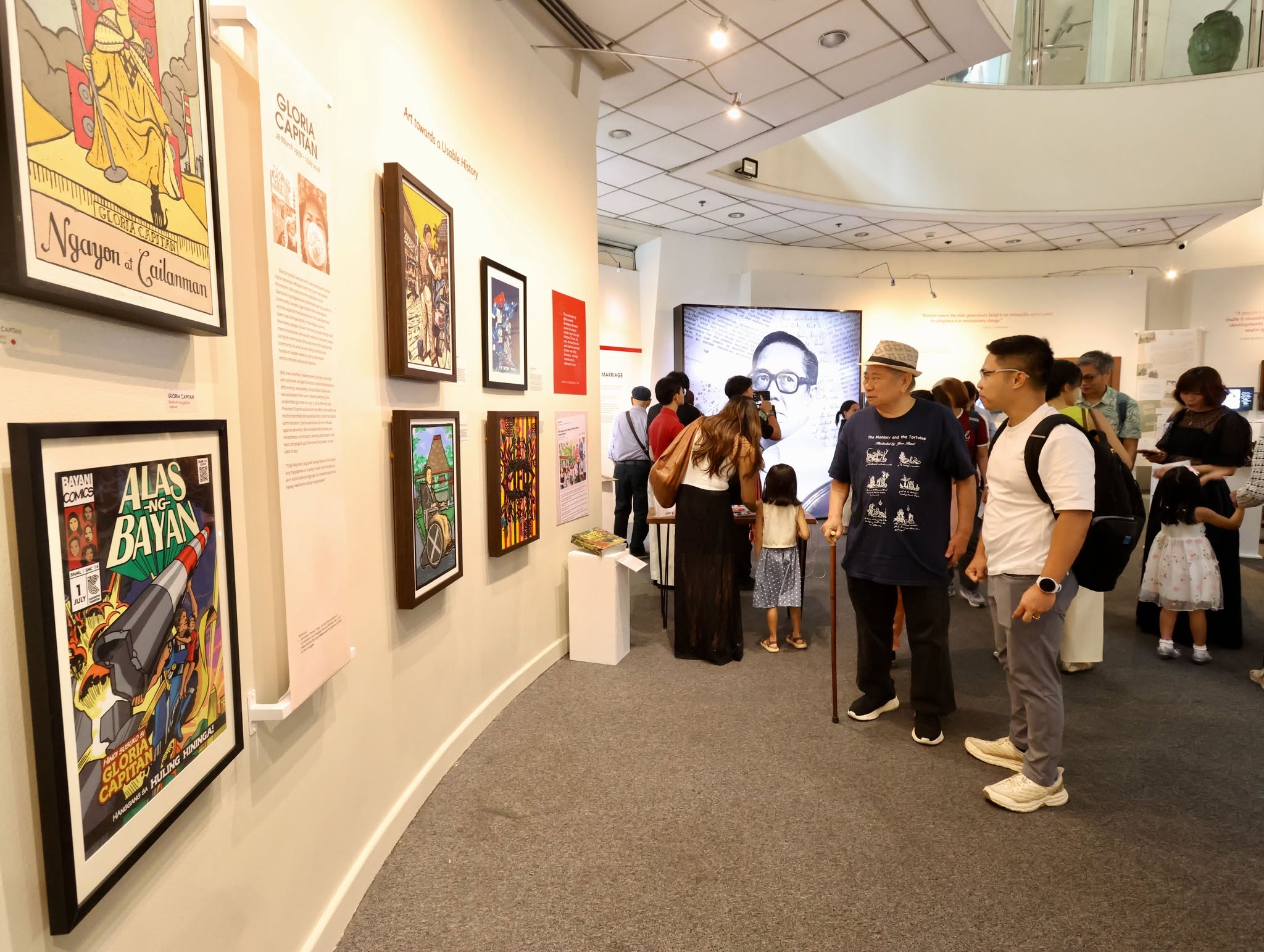
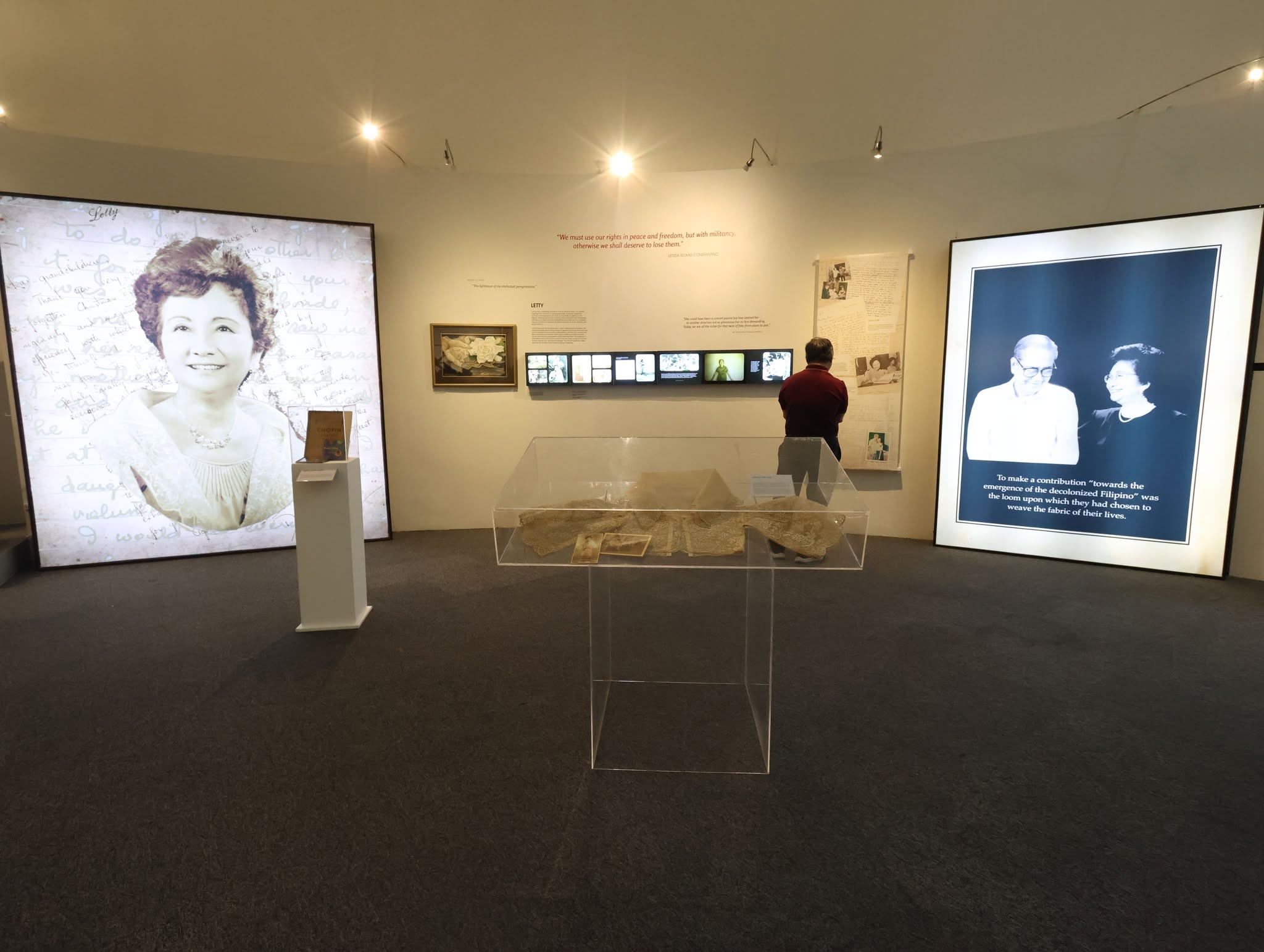
I also refer President Jimenez to the new Constantino Exhibit at the Yuchengco Museum, showcasing historians Renato Constantino and Letizia Roxas Constantino as you've never seen them before: Revealed to the public for the first time are works of art given to the couple by National Artist Vicente Manansala and celebrated painters Malang and Araceli Dans, together with photos of the writers with good friends such as Sen. Claro M. Recto and Sen. Lorenzo Tañada, alongside handwritten notes from historians such as William Henry Scott, Doreen Fernandez, and Edilberto Alegre. Samples: "May I tell you how much I have enjoyed Renato Constantino's Insight and Foresight and congratulate you both for having made many of the original articles possible…No man has had the impact on Filipino youth—and many of us who are not Filipino youth—as Tato…It would be comforting to be able to say this is one of the best statements of Philippine nationalism available, but, also, it's the only statement available! Cordially, William Henry Scott, 22 September 1977."
"
Renato Constantino was a combatant in the anti-fascist world war, a journalist, and a historian. He made history, witnessed history, and wrote history." — Prof. Bernard Karganilla, UP Manila [
https://constantinofoundation.org/the-constantino…/]
I refer President Jimenez to UP alumna/fashion designer/international image consultant Delby P. Bragais: "I fell in love with traditional handwoven Philippine fabrics many years ago when I was a budding fashion designer. My fabric of choice was Inabel, a cotton-based fabric woven in the Cordillera region up North by women-led weaving communities. As the years went by, I would meet the women behind the weaves, visit them in Abra and help create opportunities to bring them to Manila to sell their hand-woven fabrics. Through fashion shows and collaborations with event organizers and women-led organizations, I would use opportunities to show others what is possible with these handwoven fabrics. As a Designer, my Point of View was a mix of East Meets West with a global flavor, the Aesthetic was Global with Local influences using a mix of international fabrics and traditional local weaves, embellishments, natural materials and patterns inspired by tribal or ethnic symbols. For me, when we Wear our Roots, we don't just wear clothes, we wear a piece of our Culture, Heritage, and Pride in being Filipino."
We solicited Ms. Bragais' comment as part of our input for the award-winning culture and arts program of the Development Bank of the Philippines, the Habi at Istilo Attire Contest. And we congratulate the UP Office of the Vice President for Academic Affairs for conducting the UP System Quality Assurance Conference. We concur that "Quality is Duty" even as we alert our colleagues: "But in most knowledge work, quality is not a minimum and a restraint. Quality is the essence of the output. In judging the performance of a teacher, we do not ask how many students there can be in his or her class. We ask how many students learn anything—and that's a quality question. In appraising the performance of a medical laboratory, the question of how many tests it can run through its machines is quite secondary to the question of how many test results are valid and reliable. And this is true even for the work of the file clerk. Productivity of knowledge work, therefore, has to aim first at obtaining quality—and not minimum quality but optimum if not maximum quality." [Peter F. Drucker with Joseph A. Maciariello. Management: Revised Edition. NY: HarperCollins Publishers Inc., 2008, p. 198]