
Rosalinda Ofreneo: The Constantinos’ romance went beyond the commonplace connection and encompassed the country in their advocacy of nationalism. They shared what Ofreneo called “usable love,” with Letizia serving Renato “hand and foot, as prescribed by patriarchal culture,” and later becoming his equal intellectual partner.
By Liana Garcellano | Jun 29, 2026
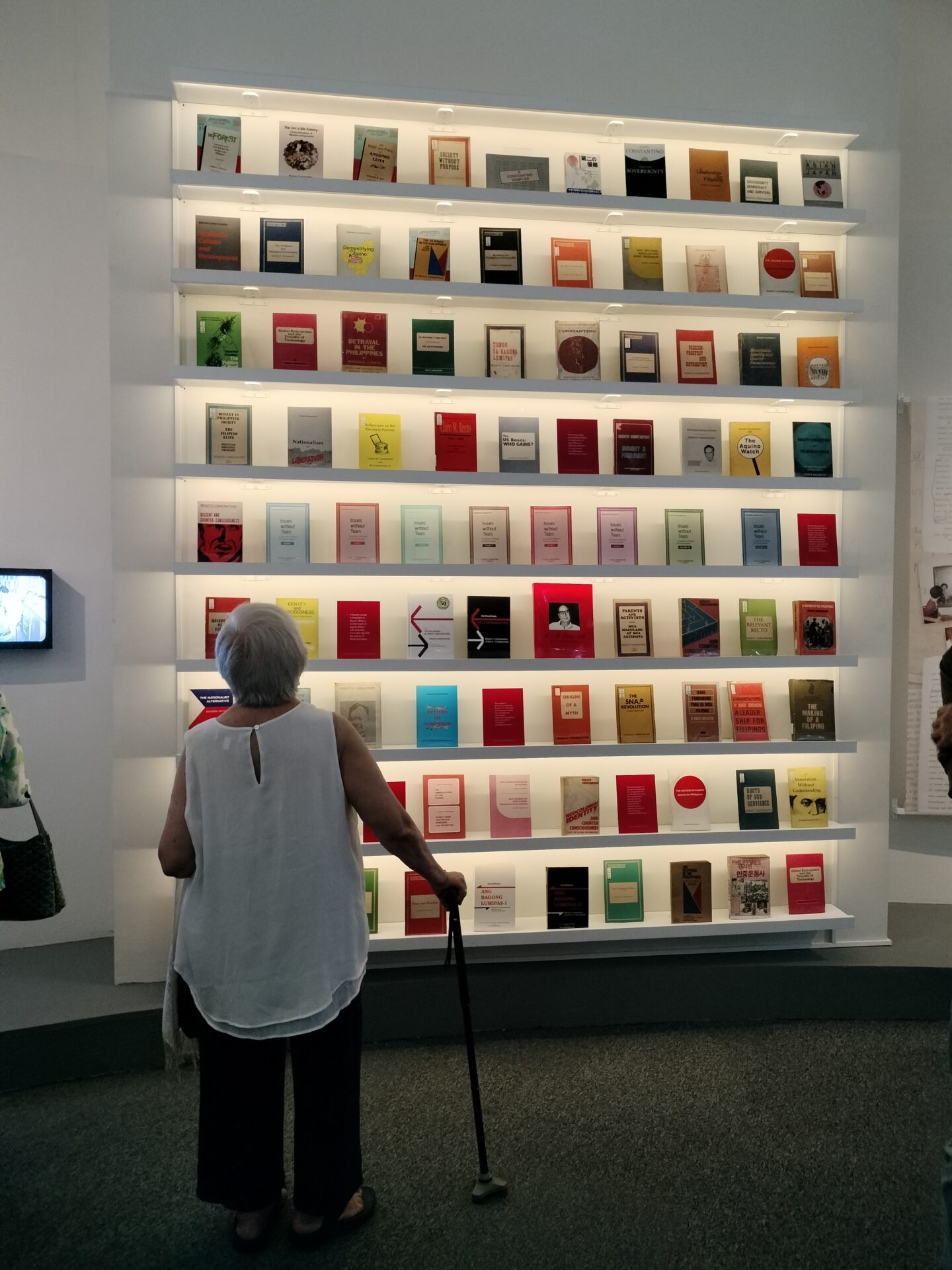
The Philippine history book “A Past Revisited,” published in 1975, has always been associated with the late historian and war veteran Renato Constantino. But he was only one of two authors, the other being his wife Letizia Roxas Constantino.
The exclusion of Letizia’s name was not a patriarchal erasure but a conscious decision for her safety, as stated on an introductory panel at Yuchengco Museum in Makati. The 1950s and 1960s were perilous times, with writings critical of America deemed heretical and dangerous, and expressing nationalist sentiments could result in solitary confinement in prison.
(In his statement last year on the 50th anniversary of the publication of “A Past Revisited,” Rhett Daza, the president of the Hunters-ROTC Historical Society, said the book, with its critique of Philippine class politics, was a publishing phenomenon. Daza said it escaped censorship because Ferdinand Marcos Sr. didn’t want controversy when his “Tadhana: A History of the Filipino People” came out a year later.)
The Yuchengco Museum panel further states that Renato’s writings wouldn’t have reached the publication stage had Letizia not gone through them, deleting entire sections and rearranging and rewriting paragraphs.
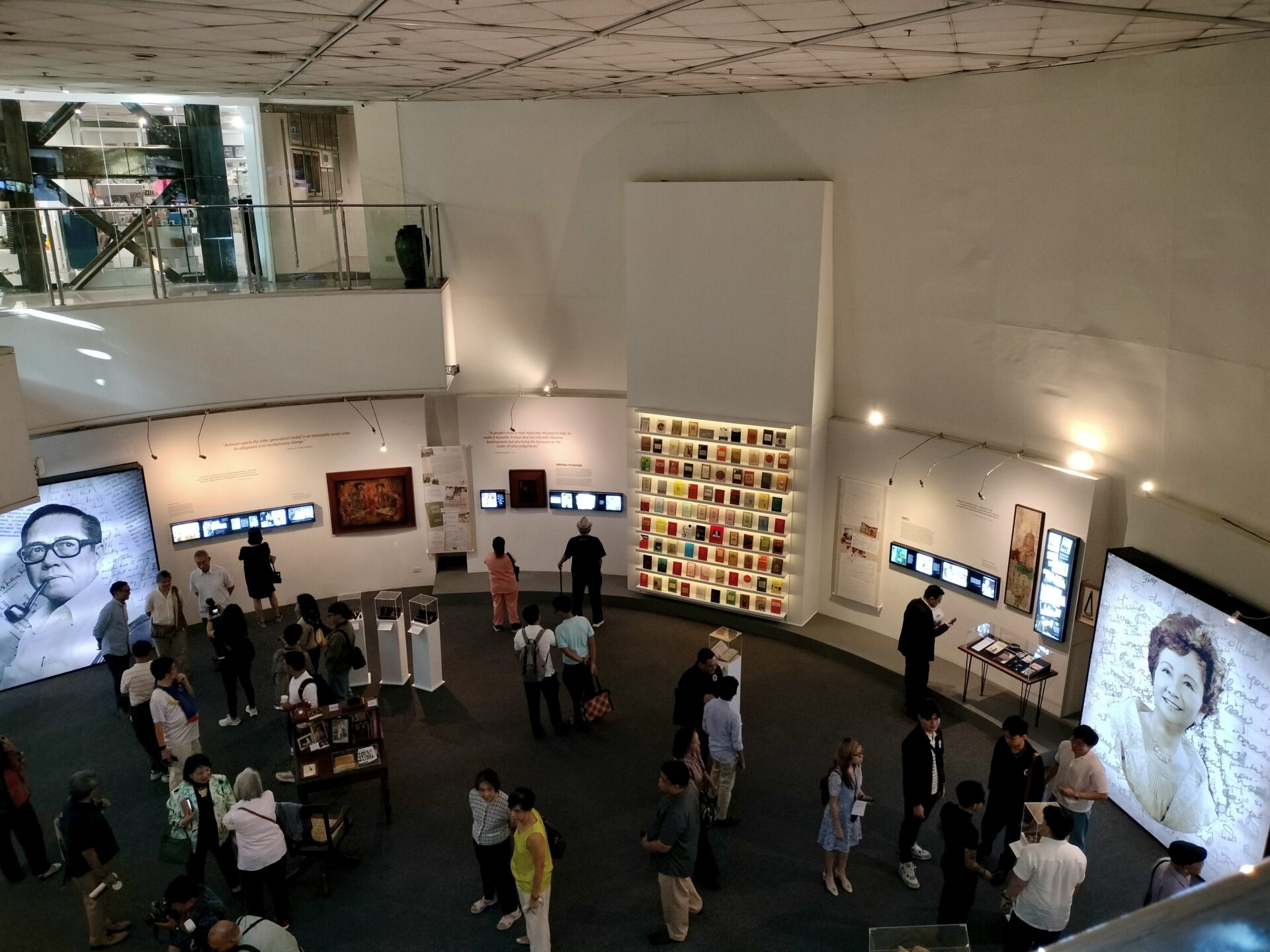
This significant vignette is one of many that viewers can glean from “Pasts Revisited: An Exhibit on a Usable History and the Romance of Renato Constantino and Letizia Constantino” ongoing at Yuchengco Museum. The exhibit highlights the couple’s efforts to decolonize the country and features collaborative artworks on “usable history” with 350 Pilipinas, a climate advocacy organization.
Beyond romance
In her remarks at the opening of “Pasts Revisited” on June 11, poet-biographer Rosalinda Pineda Ofreneo said the Constantinos’ writings embodied their passion for justice, freedom, partnership, and devotion to a vision.
“Behind the partisanship, we can see a mirroring of sorts – love of country made stronger and firmer by love for each other, the family that sprang from that love, and the close circle of a ‘few loyal friends,’ as Renato described them,” Ofreneo said.
“Pasts Revisited” completes the Constantinos’ reintroduction to Filipinos. It’s the sequel to “Letizia: A Life in Letters,” an exhibit held at the Linangan Gallery of the Constantino Foundation (CF, formerly Foundation for Nationalist Studies) on April 9-May 30, 2025.
In “A Life in Letters,” a wall text described Letizia as a chronicler, recording household purchases, services paid, gifts sent to friends and relatives, copies of books and pamphlets sold monthly, and income from apartments she and her husband managed. Object labels on vitrines said that she wrote the first and second drafts of her essays, letters and speeches by hand, and that the final versions were typed only after the drafts had been edited. Another label said the potential concert pianist wrote the eight-volume “Issues without Tears,” discussing complex social issues facing the Philippines from a historical perspective.
The Constantinos’ romance went beyond the commonplace connection and encompassed the country in their advocacy of nationalism. They shared what Ofreneo called “usable love,” with Letizia serving Renato “hand and foot, as prescribed by patriarchal culture,” and later becoming his equal intellectual partner. Letizia was a scholar and wasn’t simply “the self-described carpenter who patiently put together…the finishing touches to Renato’s masterful architectural design,” Ofreneo said.
Renato acknowledged Letizia as “the lighthouse of [his] intellectual history peregrinations,” in his introduction to “A Past Revisited,” Ofreneo said, adding that Letizia’s involvement in “A Past Revisited” and “A Continuing Past” was finally recognized when she consented to be named in the latter.
‘Usable history’
High school students’ scant knowledge of Philippine history after its removal as a standalone subject in 2014 is addressed by CF with Renato and Letizia’s concept of using history as a tool in integrating facts and events into a coherent historical process.
Usable history, as explained on the introductory panels, makes facts understandable, leading to comprehending history as a unified process and putting a stop to the past dominating the present and holding back the future. Simply put, history can be consciously made. Usable history grounds CF’s vision of using lessons from the past to shape the present and future, and counters some Filipinos’ idea of history as useless and linear. It uses arts, poetry, and science in encouraging Filipinos to look into history, including their own.
“Pasts Revisited” prods viewers to mull over why Filipinos remain perpetually poor and disempowered; why political institutions and leaders seemingly serve only the interests of a small minority; and why democracy shouldn’t concentrate on elections alone but include issues like affordable healthcare, food, education, and public transportation.
To set up “Pasts Revisited,” curators Ninel Constantino and Yla Luna Constantino overcame two challenges — Yuchengco Museum’s circular layout and putting up an exhibit that wouldn’t diminish the couple’s legacy, Ninel wrote in a message on the CF website. Ninel is one of Renato and Letizia’s granddaughters; Luna is the great granddaughter.
Ninel explained the issue: “In design, perhaps the most difficult pursuit is honesty — honesty in the use of line, shape, and color; honesty in the orchestration of balance, harmony, and movement; and, above all, honesty in service of the subject itself, revealing its essence without obscuring it beneath ornamentation or borloloy.”
With help from her siblings, mother, and designers Ohm David and Dem Bitantes, Ninel said the exhibition fell into place. She clarified that it isn’t a chronological narrative or a complete definitive account but an invitation to encounter her grandparents’ lives and works, and reflect on the values, convictions, and principles that guided them.
History lessons
A pińa blouse inside a vitrine is labeled as Letizia’s heirloom from her grandaunts Raymunda and Juana Luis, and which she wore on special occasions. Viewed through the lens of usable history, the finery isn’t just a sentimental memento but an artifact on the piña industry (along with jusi and sinamay) that was destroyed in the mid-19th century when mass-produced cotton from the United Kingdom entered the Philippines. It collapsed the local fabric industry, leaving myriad workers without a livelihood and contributing to the unrest that culminated in the Philippine revolution.
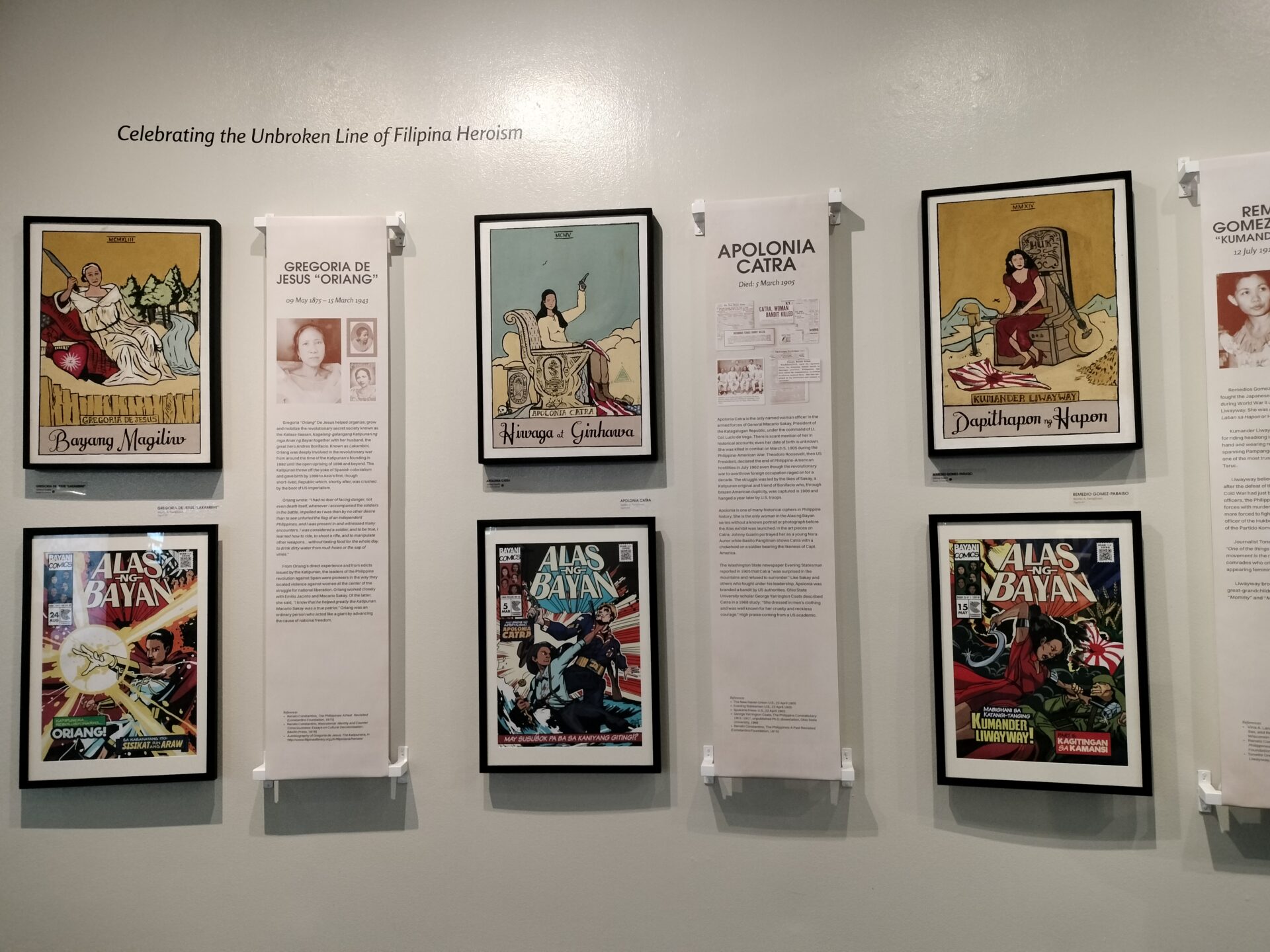
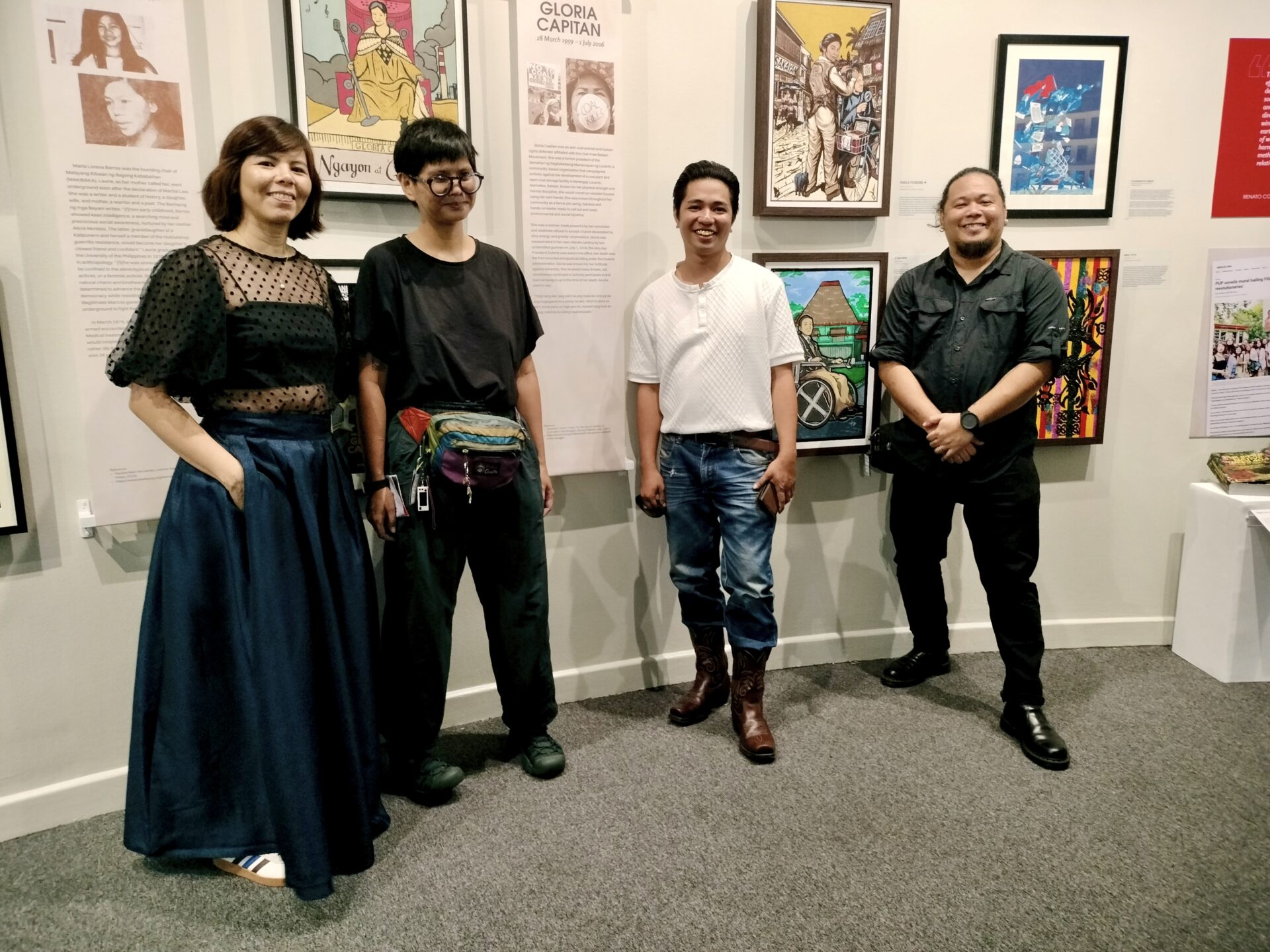
Art lends itself easily to usable history. For example, “Alas ng Bayan” (ANB) 1.0 and 2.0., a joint art exhibitions of CF and 350 Pilipinas, fêted women who fought injustice and oppression, i.e., Gregoria “Oriang” de Jesus, Apolonia Catra, Remedios Gomez-Paraiso (aka Kumander Liwayway), Lorena Barros, and Gloria Capitan.
Oriang et al. were painted in tarot card-style in ANB 1.0 by Johnny Guarin in 2019. Six years later, Billy Pangilinan reimagined them as comics superheroes for ANB 2.0.
A climate organization involved in a feminist exhibition didn’t go unnoticed. What’s the connection? Chuck Baclagon, 350 Pilipinas corporate secretariat, insisted that environmental advocates should also be committed feminists and good students of history because the country’s ecological crisis is brought about by historical and material conditions. Baclagon added that history has seen women successfully challenging patriarchy.
“Pasts Revisited” continues the history-through-art initiative with new artworks by Denise Nicole Tolentino, Nadia Cruz, Ara Alejo, and Johnny Guarin.
Inspiring figures
Denise Nicole Tolentino, in an e-mail, said art is a powerful form — visual, music, or literary — of usable history and a way for lessons of the past to become more accessible. Her serigraph “Candido’s Wave,” which took two weeks to finish, shows Candido Iban’s life as a surging wave because Iban’s life revolved around water, starting with a childhood spent by the river. He later became a pearl diver, wearing a 90-kg suit daily for 10 to 14 hours in Australia, and met Procopio Bonifacio, brother of the revolutionary leader Andres Bonifacio, by chance on a boat.
Tolentino said she was moved to illustrate the life of Iban, a farmer’s son from Malinao, Aklan, after listening to Red Constantino, CF’s managing director and grandson of Renato and Letizia, talk about him. She used serigraph print — an unfamiliar medium and suggested to her — because it captured aptly Iban’s contribution to the revolutionary society Katipunan, his donation of a printing press. (Historically, Iban and friend Francisco del Castillo bought a secondhand printing press for the Katipunan with their lottery winnings. Printing Kalayaan, the Katipunan’s newspaper, boosted membership numbers from 300 to 30,000 in months.)
According to Tolentino, it was fitting to print Iban’s story via a process that’s as analog as possible.
Ara Alejo’s “X-Mabini” reinterprets revolutionary leader Apolinario Mabini. Alejo explained in an e-mail that he wanted to showcase Mabini as a paragon of intellectual strength in a contemporary, relatable way. Revamping a stamp design he made for Sintang Lalibay 2024, he recast Mabini à la Prof. Charles Xavier, X-men’s fictional leader, particularly from X-Men: Days of Future Past movie.
Comparatively, the acrylic on canvas is more colorful because Alejo, a 350 Pilipinas clean air campaigner, wanted to “give it more vibrance to show how the past integrates [with] the present.”
“X-Mabini” underscores Alejo’s belief in integrating art and history, which, he said, was “a good way of building narratives, of giving hope that people can still do something to tip the scale and change the systems in place.”
Paralleling Alejo’s work is Johnny Guarin’s “Fabula Tonsoris,” a serigraph and acrylic on canvas situating Jose Rizal and Apolonia Catra in Tondo and transforming idle gossip into political discourse.
Nadia Cruz’s “MFD 1919” presents her experience and view on art through the reimagined logo of the Manila Fire Department (MFD), one of Manila’s oldest fire stations. Cruz said art is a powerful tool for communicating usable history and an extension of her emotions, representing her experiences that shaped her life and perspective.
“[Art] helps us remember, reinterpret, and retell stories. MFD … aims to recall the fires that transformed communities [and shaped] districts and lives through loss,” said Cruz, the communications and multimedia manager of 350 Pilipinas.
Using acrylic paint and impasto for texture and depth, Cruz took two weeks to complete the logo, an origination from imprints of old MFD bricks. She set it against the colorful and ubiquitous “Divisoria shopping bag” to show Manila’s commerce, migration, industry, and urban growth.
MFD also carries Cruz’s personal experience of a fire in 2017 near Nagtahan Bridge in Sta Mesa. She lost her home (built by her grandparents) along with her uncle and grandfather to a faulty wire that razed several houses. “I remember people using eco-bags to salvage belongings soaked in water and ash, [and] wiping them with their hands to see if they could be sold in the junk-shop,” she recalled in an email.
She said she painted the logo in different shades of black to signify destruction and the disappearance of memories, histories, and meanings.
“Decolonized Filipino”
“Pasts Revisited” reworks the traditional idea of romantic love as erasing identity and disappearing into society’s periphery. Undoubtedly, love begets sacrifice and loyalty, but it can transcend ordinariness as seen in Renato and Letizia Constantino’s relationship. They elevated love to altruism, writing and advocating for people’s nationalism to open their compatriots’ eyes to a system that “consigns people to a life of poverty, ignorance, and underdevelopment.” Likewise, the exhibit retrieves history from the margins to stir Filipinos to question dubious policies and practices, bigotry, and sexism in the hope of decolonizing them.
The words of South African journalist and photographer Tristen Taylor in a CF-organized lecture come to mind as they mirror the Philippine situation. In his June 27 lecture on the post-liberation blues of South Africa, Taylor said: “Colonial powers destroyed history. Without history, it’s easier to control people.”
“Pasts Revisited” runs until July 30 at Yuchengco Museum, RCBC Plaza, corner Ayala Avenue and Gil Puyat Avenue. Museum fees are ₱200 for regular patrons and ₱100 for students, PWDs, and senior citizens