
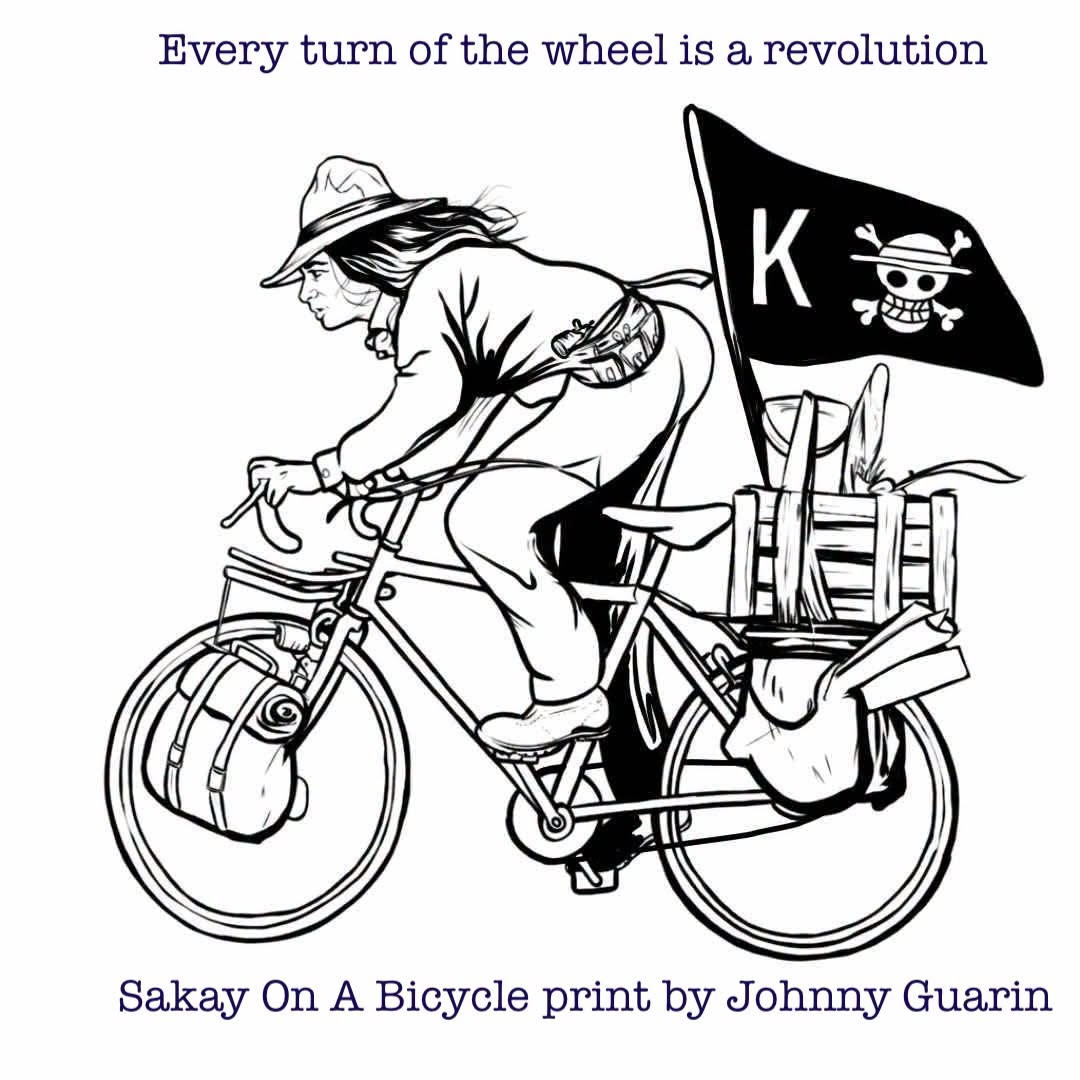
The month of July is filled with many events that deserve commemoration. The founding of the Katipunan on its seventh day in 1892 is one, and the death of the great Aurelio Tolentino on July 5 in 1915 is another. But July 14 deserves prime place as well in national remembering.
On this day, Katipunan original Gen. Macario Sakay, President of the Republika ng Katagalugan, went down from the mountains on foot, accompanied by his officers Francisco Carreon, Leon Villafuerte, Julian Montalan, and Lucio de Vega.
U.S. officials had earlier sent an emissary to Sakay to convey their commitment to establish a Philippine national assembly, with independence as the eventual goal. In return, they asked, Sakay must end the armed resistance. Sakay agreed on condition that a general amnesty be granted to his men and that their safety is assured.
Sakay and his revolutionary council entered Manila unmolested on 14 July 1906, in full rayadillo uniform armed with pistols and daggers. They were welcomed by a brass band that followed them wherever they went, and for four days they were feted by hundreds of people with banquets and dances held in their honor. The writer Antonio K. Abad was 19 when he witnessed the people’s warm embrace of Sakay and his officers, and he recalled the hero’s great reception. “So great [was] their popularity,” wrote Abad, “that their countrymen shouted: Mabuhay si Sakay! Mabuhay ang mga bayani!”
The open display of affection towards Sakay and his comrades from the day of their arrival on 14 July onwards showed the extent of popular support enjoyed by Sakay and their campaign, which had kept faith with the Katipunan calls for ginhawa and independence. But Sakay’s popularity likely alarmed the Americans.
On the morning of 17 July, the revolutionaries attended a town fiesta in Cavite on the invitation of American officials, who received Sakay and his companions. As the orchestra struck its first notes and as dancing began in the ball organized in honor of the revolutionaries, “constabulary soldiers under the American officers, their guns cocked and with fixed bayonets” quietly surrounded the town hall outside. Inside, “American officers with pistols in hand” quickly emerged from a room and encircled, disarmed, and arrested Sakay and his companions.
Victims of American duplicity, the freedom fighters were imprisoned for over a year, and on 13 September 1907, Sakay was hanged along with Lucio de Vega.
Said Sakay just before his execution, “Death comes to all of us sooner or later, so that I will face the Lord Almighty calmly. But I want to tell you that we are not bandits and robbers, as the Americans have accused us, but members of the revolutionary forces that defended our mother country, Filipinas! Farewell! Long, live the republic and may our independence be born in the future!”
In October 1907, with the death of the last real Filipino resistance leader, the Americans inaugurated the Philippine Assembly, composed largely of members of the elite who had capitulated quickly or supported the U.S. occupation early.
Sakay’s hanging came with an under-examined transition as well. From the radical troika of Rizal, Bonifacio, and Sakay, national leadership would move to republican elites defined by the Quezon-Osmeña-Roxas brand of rule that moldered and morphed steadily decades later into degenerate dynastic administrations exemplified by the flood-control-project purveyors of today, each successive regime a pageant of varying degrees of vassalage that would have caused Jose, Andres, and Macario to recoil.