
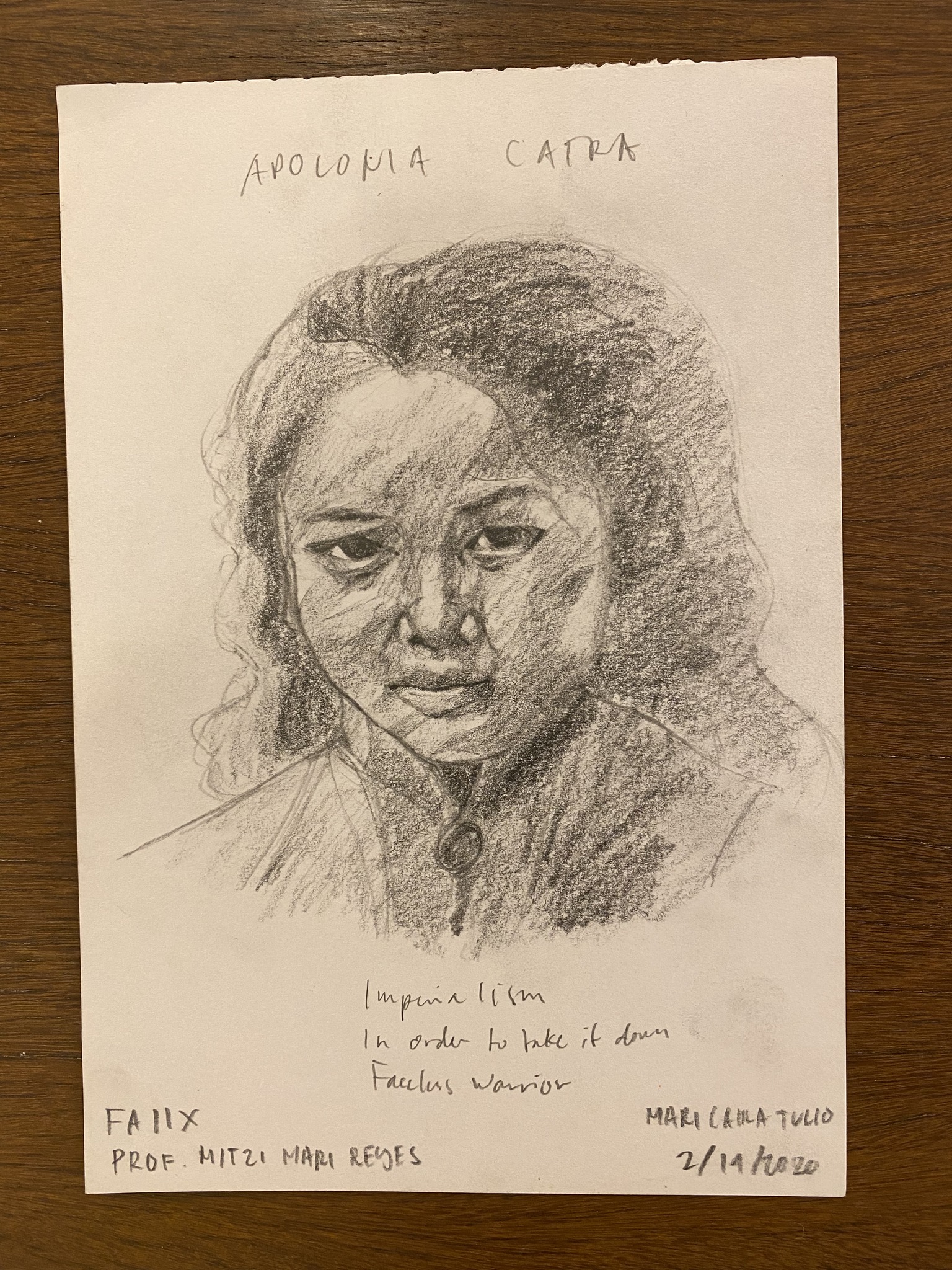
Today is the 121st death anniversary of the Filipina hero, Apolonia Catra. She was killed in combat by U.S. occupation forces on March 5 in 1905. Her date of birth is unknown and there is no known portrait or photograph of the revolutionary. With pride we share with you three images created by Mari Laila Tulio and Chris Jerald Ubaldo, students of the esteemed teacher, Prof. Mitzi Mari Reyes, in their UP Diliman Fine Arts class in 2020, just before the pandemic lockdowns were imposed. The students were asked to imagine how Apolonia might have looked like. (Discover more in the coming Alas ng Bayan 2.0 exhibit at the UP Manila Museum of a History of Ideas from March 10-21.)
Catra is the only named woman officer in the armed forces of General Macario Sakay, President of the Tagalog Republic, under the command of Lt. Col. Lucio de Vega. Theodore Roosevelt, then the US president, declared the end of Philippine-American hostilities in July 1902 even though the revolutionary war to overthrow foreign occupation raged on over an endless decade. The struggle was led by the likes of Sakay who, through brazen American duplicity, was imprisoned in 1906 and hanged a year later by US troops. Apolonia is one of many historical ciphers in Philippine history. The Washington State newspaper Evening Statesman reported in 1905 that Catra “was surprised in the mountains and refused to surrender.” Like Sakay and others who fought under his leadership, Apolonia was branded a bandit by US authorities. In a 1968 study by the Ohio State University scholar George Yarrington Coats, Apolonia was described in a way that brings to mind current LGBT debates and issues surrounding extrajudicial killings (EJKs): “She dressed in men’s clothing and was well known for her cruelty and reckless courage.” High praise coming from a US academic.
Why do think there is so little material about women heroes in our country’s history? #PastsRevisited #ReimagineThePast