
The March of Contradictions
Source: Malaya Business Insight | By Bernard Karganilla | Published: March 26, 2026
TRUMP’S retort to the question of Morio Chijiiwa of TV Asahi as to why the American Commander-in-Chief did not inform the allies in Europe and Asia ahead of the US attack on Iran: “Who knows better about surprise than Japan? Why didn’t you tell me about Pearl Harbor, OK?”
This is the US Chief Executive whose White House stated nine days before Operation Epic Fury: “After 36 days of brutal combat, Japanese resistance ended, securing Iwo Jima’s place among the most consequential and hard-fought battles in American history. Early in the campaign, the raising of the Stars and Stripes atop Iwo Jima’s highest peak, Mount Suribachi, became an enduring image—an unmistakable symbol of American resolve, sacrifice, and victory in the Pacific. Of the 70,000 servicemen who fought at Iwo Jima, nearly 7,000 of America’s finest Marines gave their lives on the island in defense of our freedom…we remember the enormous sacrifices of the Greatest Generation, and we renew our solemn promise to honor their legacy by defending the liberties they secured.” [America 250: Anniversary of the Battle of Iwo Jima, The White House February 19, 2026]
This is the same Ms. Sanae Takaichi, Member of the House of Representatives, who questioned the Japanese government of the day 30 years ago about the “Comfort Women” Issue in textbooks. [https://www.mofa.go.jp/policy/postwar/page22e_000883.html]
And here is the excerpt of the government’s Written Answer to the Second Question Submitted by Ms. Sanae Takaichi, 09 April 2021: “Regarding II-2: The study on the issue of so-called wartime comfort women conducted by the Government of Japan could not confirm any accounts in the documents identified, which would directly indicate that comfort women were forcefully taken away by military or government authorities. On the other hand, the study also referred to other materials, including the contents of various collections of testimonies as well as the results of testimony hearings of former comfort women in the Republic of Korea. The content of the government study’s findings is a result of careful consideration of those sources. The government study’s findings are a compilation of all of the findings from the study, which the government made every effort to carry out faithfully. Therefore, the government considers that there is no reason at this time to revise the content of the Government study’s findings.” [https://www.mofa.go.jp/a_o/rp/page22e_000950.html]
The Japanese government of that day, Ms. Sanae Takaichi, and the Japanese salarymen were probably oblivious to the significance of the date of the retort: 09 April 2021, which was a peak period of the COVID-19 pandemic but also the 79th anniversary of the Bataan Death March.
Be that as it may, the Commission on Human Rights (as the Philippines’ National Human Rights Institution as well as the Gender and Development Ombud under the Magna Carta of Women) had issued a Gender Ombud Policy Advisory calling for full reparation, recognition, redress, and an official apology for the Malaya Lolas, underscoring that justice for the Filipina survivors of wartime sexual slavery during the Japanese occupation of the Philippines in the Second World War remains an urgent human rights obligation. The Commission reiterates the urgency of implementing the recommendations of the United Nations Convention on the Elimination of All Forms of Discrimination Against Women (Alonzo et al. v. Philippines): the Philippine government to ensure full reparation for the survivors, including recognition, compensation, rehabilitation, and measures to restore their dignity and reputation as well as the establishment of a nationwide reparations program for victims of war crimes, the preservation of historical memory sites such as Bahay na Pula in Pampanga, and the integration of the history of Filipina survivors of wartime sexual slavery into educational curricula. “The Commission emphasizes that reparations are not merely a form of humanitarian assistance, but a human rights obligation grounded in international law.” In line with the CEDAW Committee’s views, the Commission “calls for urgent action from government institutions…the enactment of legislation establishing a state-sanctioned nationwide reparations scheme, the provision of sustained medical and psychosocial support for survivors, the preservation and memorialization of sites linked to their experiences, and the integration of their stories into the national education system to promote remembrance and prevent the recurrence of such violations.” [https://chr.gov.ph/2026/statements/chr-calls-for-full-reparation-recognition-and-justice-for-the-malaya-lolas/] [https://chr.gov.ph/wp-content/uploads/2026/03/CHR_VI_NO_2026_003_Gender_Ombud_Policy_Advisory_on_the_Call_for-2.pdf]
Coincidentally, the Malaya Business Insight issue of 17 February 2026 reported that 300 personnel and assets of the Japan Ground Self-Defense Force are to be direct participants in the annual Salaknib military exercise between Filipino and American forces this April. Framework: The Philippines and Japan signed in July 2024 a Reciprocal Access Agreement, ratified by President Marcos in November 2024, concurred in by the Philippine Senate a month later, approved by the Japanese Diet in June 2025, and came into force three months later.
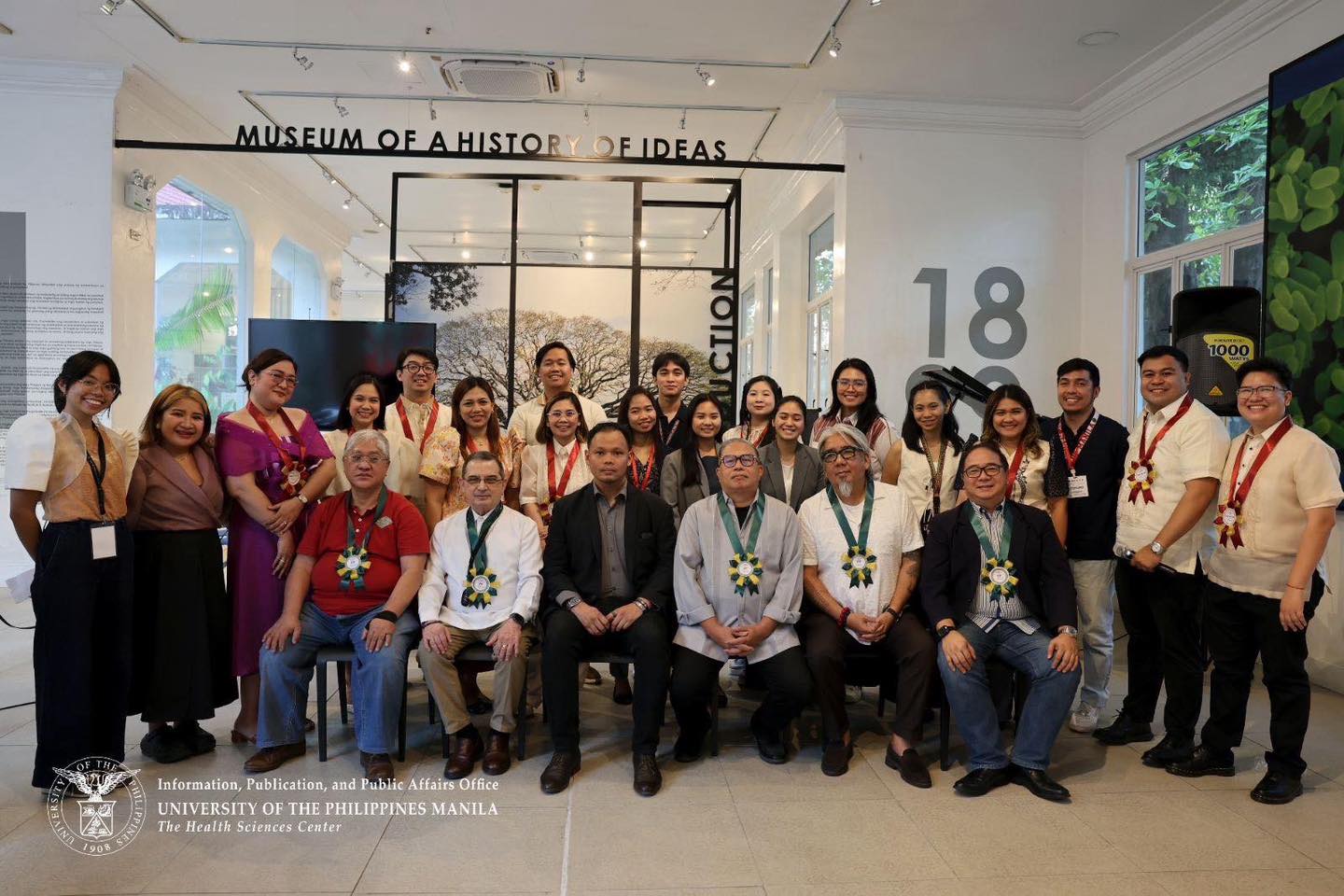
These matters are spotlighted as the International Women’s Month concludes, and we have the privilege to report the successful run of the Alas ng Bayan 2.0 Exhibit at the UP Manila Museum of a History of Ideas mounted by Red Constantino, curated by Rio Constantino, and featured the revolutionary Gregoria “Oriang” de Jesus, Apolonia Catra (the only named woman officer of the Katagalugan Republic), Hukbalahap Kumander Liwayway, Maria Lorena Barros (founding chair of the Malayang Kilusan ng Bagong Kababaihan), and Gloria Capitan (who had resisted the construction of a coal plant and the first recorded extrajudicial killing under Duterte).