






Spotlight

Long trial on massacre of PH’s foremost botanist, colleagues nearing promulgation – Kodao.org
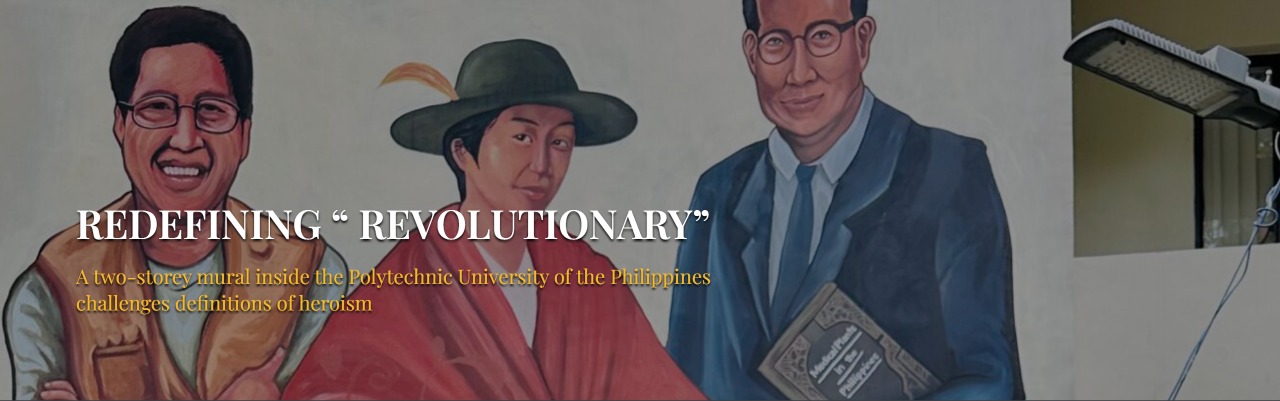
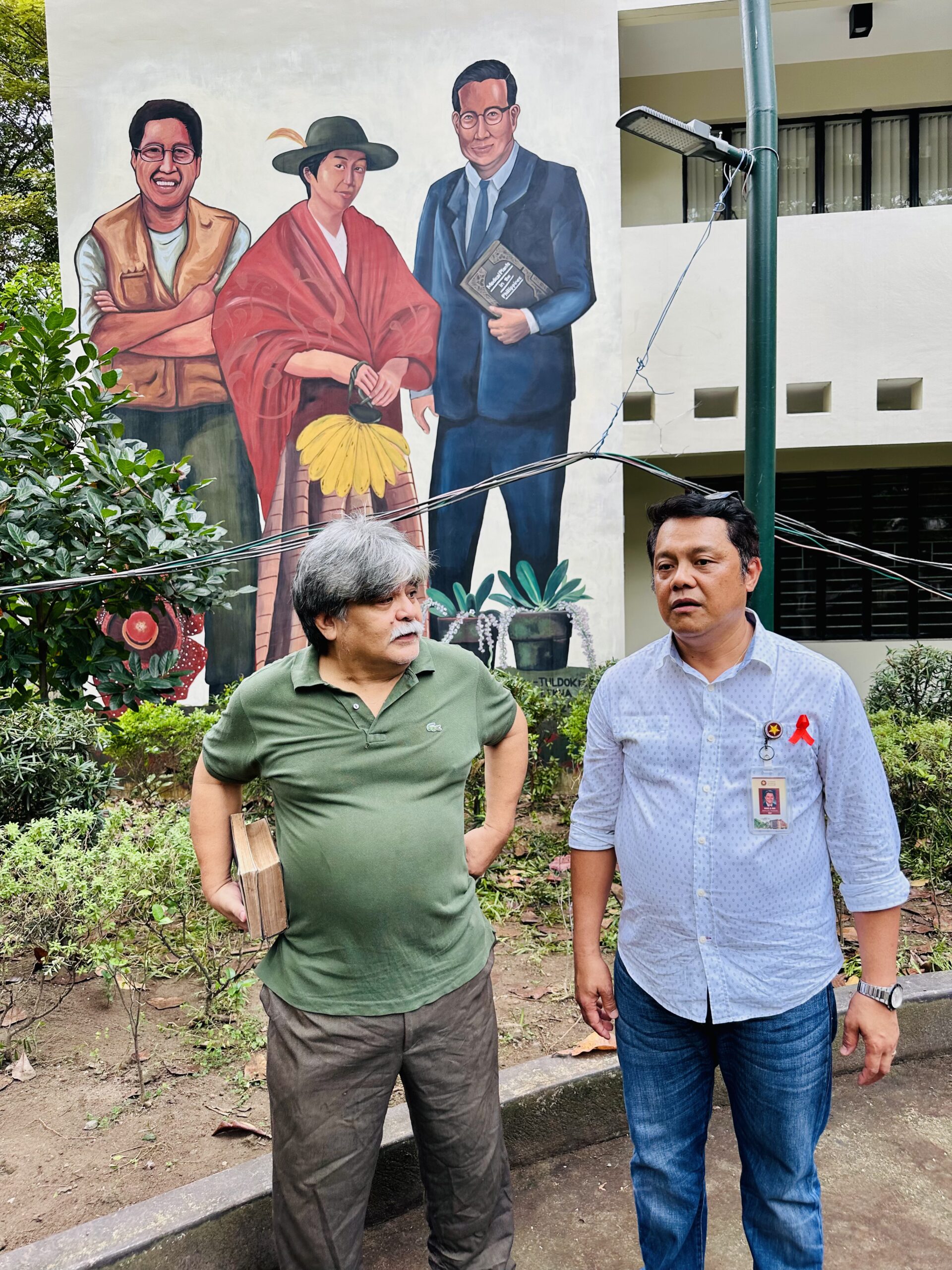
November 15, 2025 | Kodao.orgThe decade-and-a-half trial on the massacre of the country’s most famed botanist and his colleagues 15 years ago today is due[READ]

“Leonard’s song in a time of flooding,” a moving story by science journalist Bless Aubrey Ogerio
“If a tree falls in a forest and no one is around to hear it, does it make a sound?” This old riddle, according[READ]

“Leonard Co, Bayani Ko” commemorates life, legacy of People’s Botanist
Quezon City, 15 November – Botanists and advocates gathered today at the Institute of Biology in UP Diliman to mark the 15th year since the[READ]
Pasts Revisited
Julio Nakpil
We remember today Julio Nakpil, born on 22 May 1897. He was a composer and, as a general in the Philippine Revolution, belongs to the pantheon of giants of the Filipino nation. Nakpil adopted the clandestine name J. Giliw. He led a full and meaningful life serving his people. His letter, dated 28 September 1897, is most interesting. Nakpil wrote the letter as the head of the revolutionary movement’s High Council to raise funds for the Katipunan ng mga Anak ng Bayan four months after assassins carried out the order of Emilio Aguinaldo to execute Andres Bonifacio. According to the historian Jim Richardson, “Nothing in Nakpil’s letter alludes to the ‘Republica Filipina’ of which Aguinaldo had been elected president at the Tejeros convention in March.” Just as interesting, Nakpil was writing from Sta. Ana, which, said RIchardson, was “even closer to the seat of Spanish power” compared to late 1896 when the Sanggunian was based in Pasig. Even more interesting, one might expect the recipient of Nakpil’s fundraising letter to be “a wealthy resident of Sta. Ana, or of another suburb or town nearby.” But the letter’s addressee was Cipriano Ortiz, “the parish priest of Paete, Laguna, a Franciscan friar and, presumably, a Spaniard.” *
Julio Nakpil would eventually marry the Katipunan’s Lakambini, Gregoria de Jesus, the wife of Andres Bonifacio. They had eight children. (Two died in their infancy.) Nakpil would write in his memoirs about Aguinaldo’s orders to assassinate not just Bonifacio but also Gen. Antonio Luna.
Readers are encouraged to listen to Nakpil’s compositions, which are available on Spotify and Apple Music. Just type “Julio Nakpil” and look for his albums. According to BahayNakpil.org, “Several of Nakpil’s compositions were inspired by the revolutionaries’ struggle to regain freedom for the country. An admirer of Jose Rizal . . .” Nakpil wrote Pahimakas (1897), “a funeral march commemorating Rizal’s execution” while the piece Pasig Pantayanin (1898), he dedicated to the revolutionary forces.” Nakpil also wrote Pamitinan (1897), a song for revolutionaries “who went into hiding because of persecution.” Nakpil enlarged his Himno Nacional later into a grand march “to be played at the Rizal Monument, and changed its name to Salve Patria (1896).” Nakpil died on November 2 1960.
(Main image of the hero is from BahayNakpil.org and the poster art and layout is by Rica Dominguez)

Events
Videos
Stories

One of the country’s longest running book clubs, Flips Flipping Pages, holds chose The Philippines: A Past Revisited for their monthly book discussion
Delightful Saturday discussion at the Foundation's Linangan Gallery with the book club #FlipsFlippingPages, founded 2007, centered on #aPastRevisited and #TheContinuingPast. [...]

Decolonization and Decarbonization in the Philippines: Philippine History and the Climate Crisis, with IPCC climatologist Lourdes Tibig and Red Constantino
Only those who email can be accomodated this Saturday/Sept. 7 at the Linangan Gallery on Panay Ave. Make sure you write to constantinofoundation@gmail.com if interested. [...]

Weathering the Storm: A PUP Lecture and Discussion on Philippine History and Climate Science with IPCC climatologist Lourdes Tibig and Constantino Foundation President Red Constantino
The lecture's open to the public this MONDAY/Sept. 9. In cooperation with the PUP College of Science, College of Social Sciences and Development, and Research Institute for Culture and Language, in commemoration of the 120th founding year of the Polytechnic University of the Philippines. [...]

Weathering the Storm: A PUP Lecture and Discussion on Philippine History and Climate Science with IPCC climatologist Lourdes Tibig and Constantino Foundation President Red Constantino
In PUP last Sept. 9, the Constantino Foundation pointed to intersections between Philippine history and the climate crisis, with the esteemed climatologist Lourdes Tibig. The event was organized by PUP's College of Science, College of Social Science and Devt, and the Research Institute on Culture and Language. It was lovely to again break bread with Science Dean Lourdes Alvarez, Dr Reylan Viray, and Dr Sherrenne de Amboy, chair of PUP's College of History, in commemoration of PUP's 120th founding anniversary. [...]