Revisiting February 4, 1899: The Philippine-American War in Historical Context
Read Original Story Here
We share here a panelist’s reflection on the historical discussions from recent Pandesal Forum sessions, including those on the Abad Santos family and the Philippine–American Memorial Day, and on the transmission of historical memory across generations.
(SPOT.ph) Before they were household names, they were simply Hochi and Minh—cousins who spent a lot of time together, little children running around during Sunday brunches at their grandparents’ home. What may have seemed ordinary occasions back then would, in fact, serve as foundation for the two girls who would become two of the country’s most admired journalists.
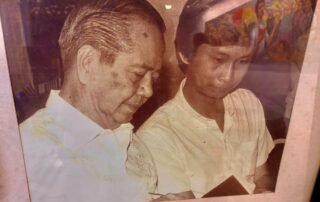
Long before they stood in front of cameras and reported on the day’s events, Kara David and Karmina Constantino were learning the art of storytelling, the power of perspective, and the quiet strength of public service from their grandmother, Letizia Roxas Constantino—writer, editor, and constant collaborator of noted historian Renato Constantino, her husband, with whom Letizia produced The Philippines: A Past Revisited, and The Philippines: A Continuing Past, among other titles.

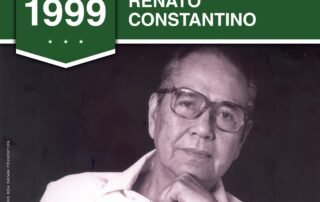
Renato Constantino, nationalist, political analyst, and historian, may have been the more famous [READ]
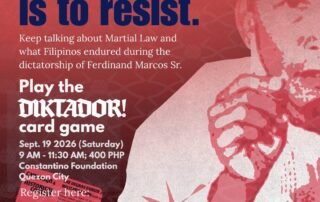
February 4, 2026 marks the 127th anniversary of the beginning of the Philippine-American War, a badly remembered chapter in our history.
We don’t know how many died as a result of the U.S. invasion in 1899. Estimates range from a low 250,000 to as high as one million dead. In a New York Times interview published in May 1901, U.S. Gen. Franklin Bell put the figure of dead Filipinos at 600,000 in Luzon alone. The estimate did not include the slaughter of Samar or ‘pacification’ campaigns in other provinces.
Disregard for Filipino lives was widespread among U.S. troops. For instance, a soldier in the Washington Regiment wrote to his family: “[O]ur fighting blood was up, and we all wanted to kill ‘niggers’ . . . We killed them like rabbits; hundreds, yes, thousands of them.” A private with Utah Battery wrote: “The old boys will say that no cruelty is too severe [READ]
Image source: Mabuhay News
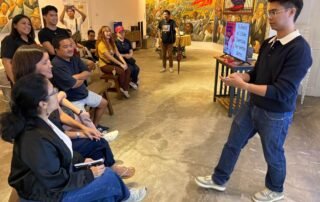
On January 31 at Kamuning Bakery Café, Quezon City, the Pandesal Forum gathered scholars, family representatives, and public historians to commemorate Pedro Abad Santos, a revolutionary leader and tireless advocate for workers and peasants. The discussion emphasized Abad Santos’s long-standing commitment to social justice: his leadership in the socialist movement, his advocacy for agrarian reform, and his legal and political work in defense of marginalized communities. Speakers recalled how he repeatedly sacrificed personal wealth and comfort to stand with the rural poor and organized labor, and how his anti-colonial and anti-fascist convictions shaped his public life.
Among those who spoke were Desiree Benipayo, who reflected on Abad Santos’s personal sacrifices and his legal aid to indigent farmers; Eufemio Agbayani III of the NHCP, who placed Abad Santos within the broader arc of [READ]
“If freedom is to be preserved, fascism must be destroyed at all costs.”
These are the timeless words of the hero Pedro Abad Santos, born 150 years ago on 31 January 1876. He was a fighter for the welfare of his people even early in his life.
Abad Santos stopped going to school to join the Katipunan, where he eventually held the rank of komandante or major. He fought in 1899 as the aide-de-camp of the great Gen. Maximino Hizon in the war against the invading American forces.
Pedro Abad Santos was “an elderly nationalist lawyer” from a landowning family in Pampanga. He was called “Don Perico” by his clients, “a term of both respect and endearment, the formality of ‘don’ and the familiarity of the nickname.” He offered “his legal expertise pro bono to protect the rights of peasants and workers, which composed a [READ]
The Constantino Foundation invites the public to a Pandesal Forum commemorating the 150th Birth Anniversary of Pedro Abad Santos, an important figure in the history of Philippine social reform.
Featuring insights from Renato Redentor Constantino and Eufemio Agbayani III, with Wilson Lee Flores as moderator.
January 31, 2025 (Saturday)
10:00 AM
Kamuning Bakery Cafe, Quezon City
[READ]
Dr Ian Christopher Alfonso gave a lecture yesterday worthy of the 150th birth anniversary of the revolutionary Pedro Abad Santos. We thank our co-organizers, the National Historical Commission of the Philippines, the UP Department of History, and the City of San Fernando, Pampanga. Read More About The Lecture Here
by Renato Redentor Constantino
(The essay was published first in ABS-CBN.)
“If freedom is to be preserved, fascism must be destroyed at all costs.”[1]
These are the timeless words of the hero Pedro Abad Santos, born 150 years ago on 31 January 1876. He was a nationalist, a revolutionary, and a fighter who lived by the principles of the Katipunan’s Kartilya. To forget Abad Santos is to forget who we are and who we can still be as a people. Perhaps this is why so many feel so restive yet so lost today, adrift in a brutal ocean of political noise with no safe shore in sight. Divorced from our own history, we bob and roll with the waves without a rudder.
Apart from the work of theater and movie production crews in 2025, it is difficult to tell which national group or coalition organized public events last year [READ]