
Spotlight
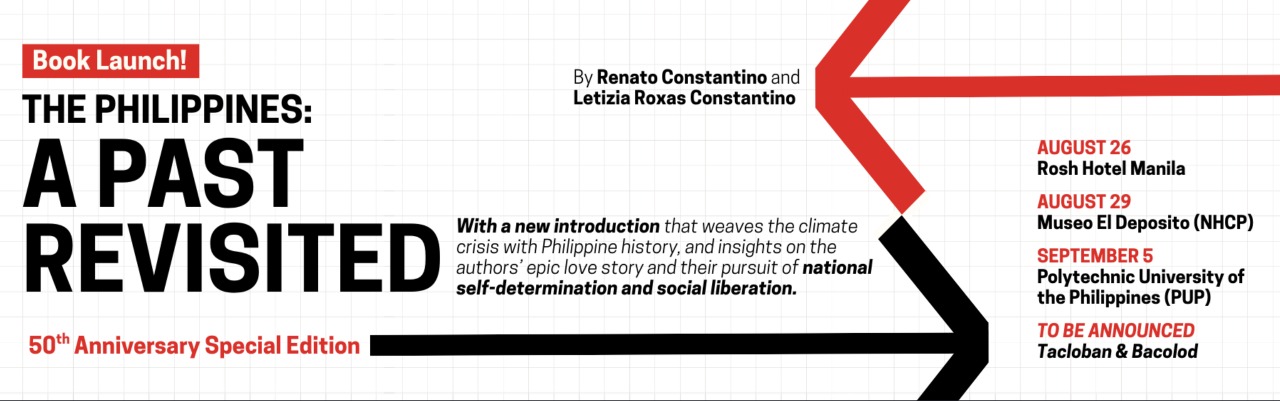
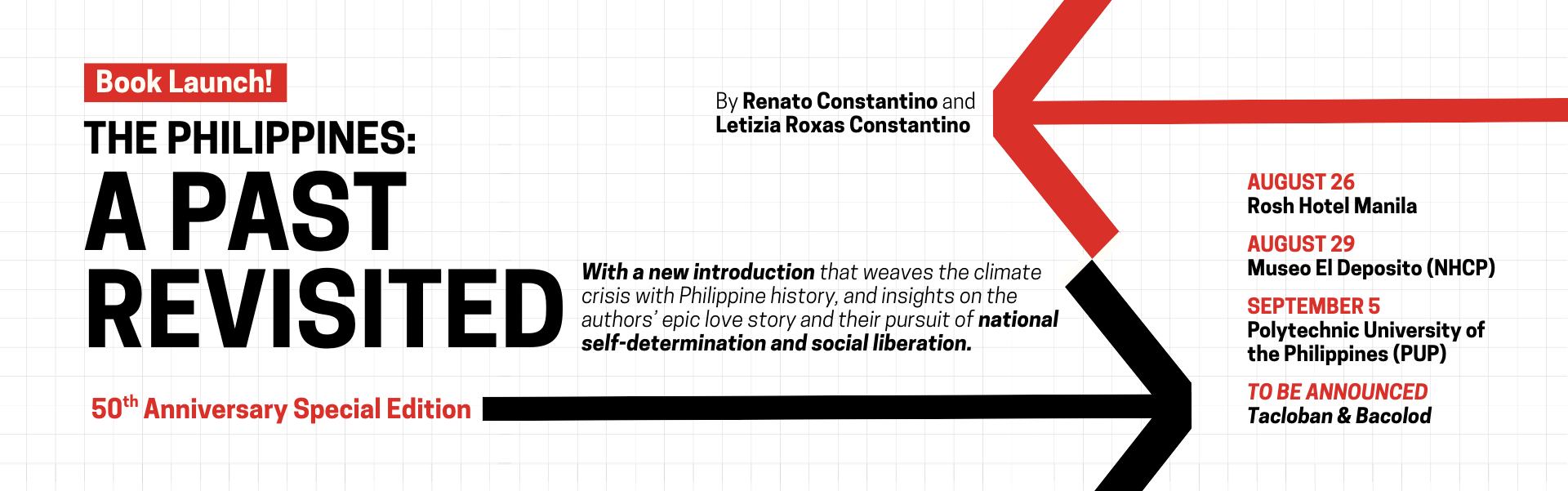
Constantino Foundation and DLSU Celebrate 50 Years of The Philippines: A Past Revisited
The Bienvenido N. Santos Creative Writing Center and the Department of History of DLSU, in cooperation with the Constantino Foundation, held the launching of[READ]
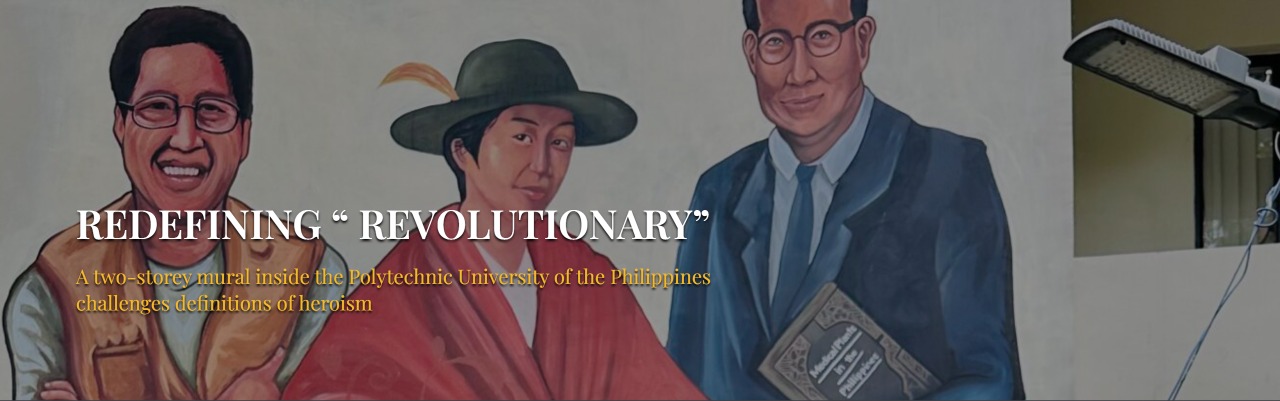
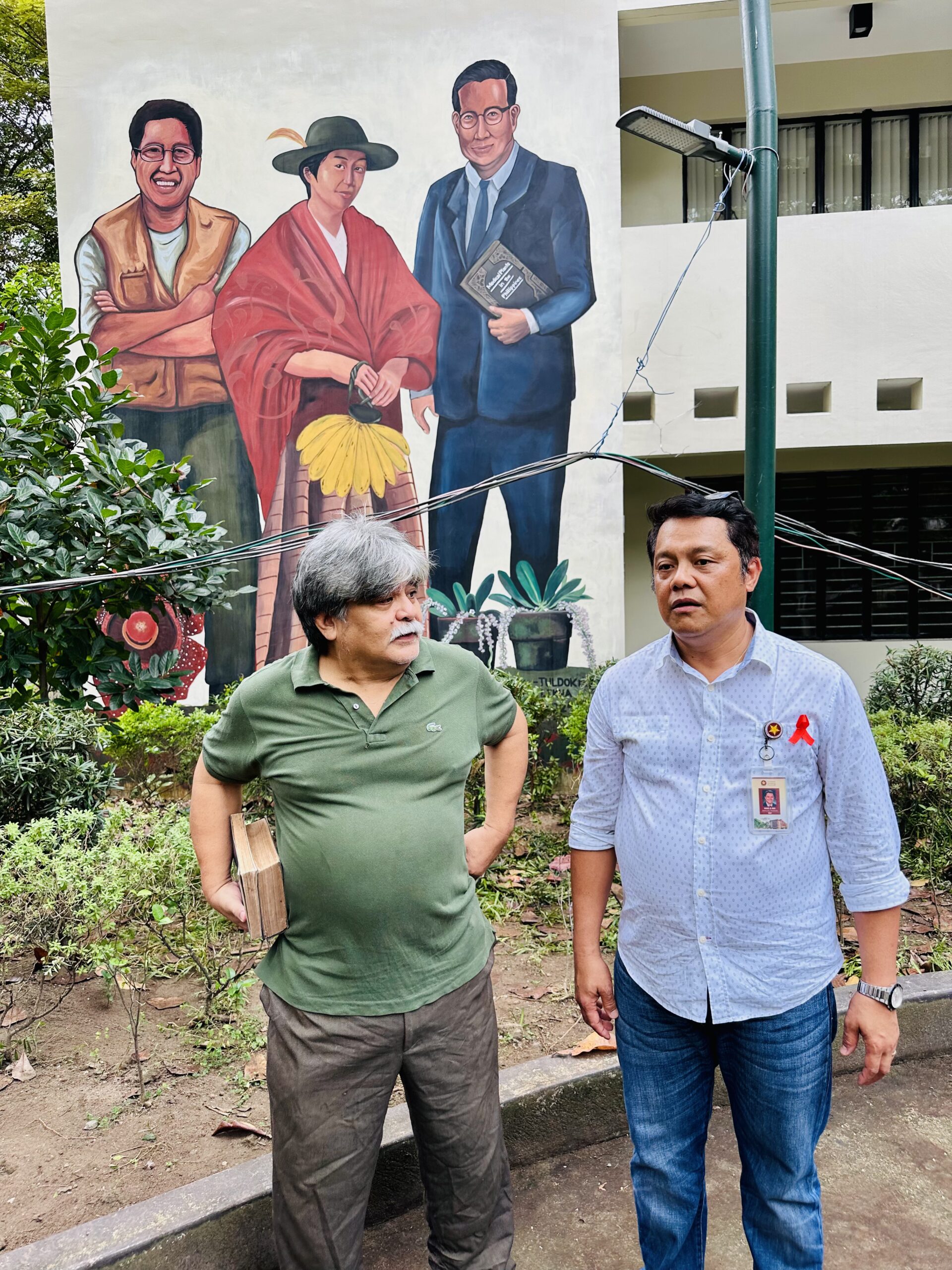
Alas Ng Bayan 2, opisyal nang inilunsad sa PUP Mabini Campus
Matagumpay na binuksan sa PUP Mabini Campus ang Alas ng Bayan 2.0 exhibit na naglalayong itampok at pagnilayan ang unbroken line of Filipina heroism[READ]
Alas ng Bayan 2.0 Opens Tomorrow at PUP Sta. Mesa Campus
The Constantino Foundation, in partnership with the Polytechnic University of the Philippines (Official), PUP Department of History PUP Samahan ng mga Mag-aaral ng Kasaysayan ,[READ]
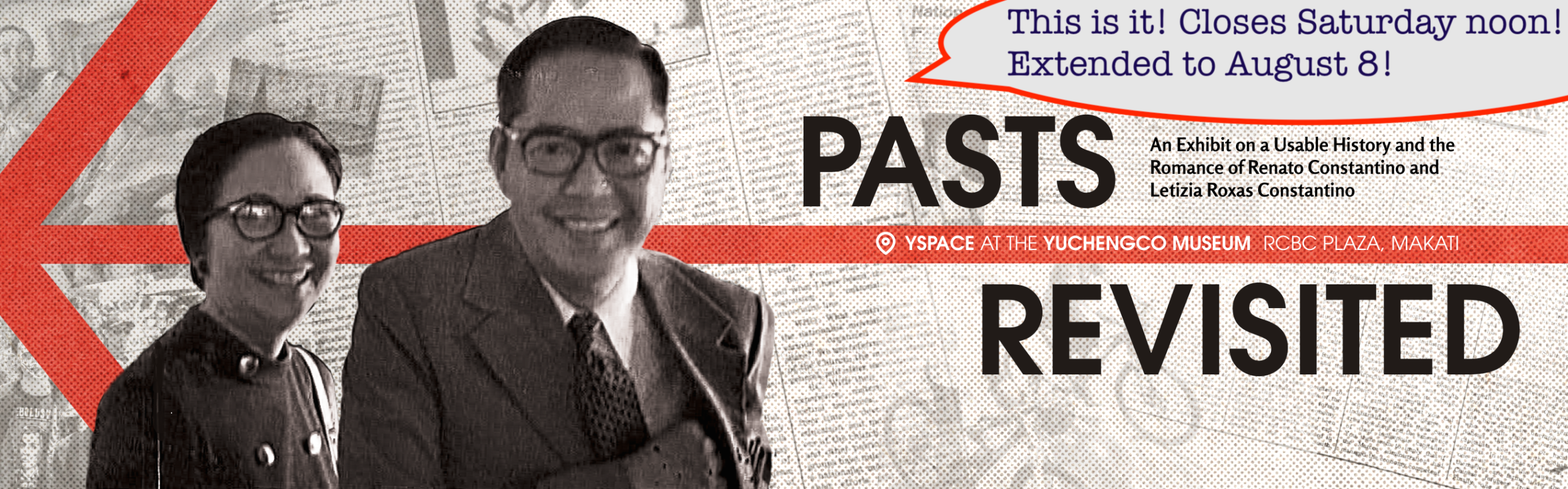
Pasts Revisited
A NATIONAL TREASURE: LEONARD L. CO (1953-2010) By Perry S. Ong and Nina Ingle
Leonard L. Co, unparalleled plant scholar and a scientist for the people, died last November 15, 2010 in Leyte from gunshot wounds obtained during an alleged crossfire between the Philippine Army 19th Infantry Battalion and the New Peopleís Army. Co had pioneered the writing of manuals on Philippine medicinal plants for community-based health care in the 1970s and worked as a pharmacologist of Chinese medicinal plants in the 1980s. At the time of his death, Co was doing research on native forest species for reforestation. He was also assembling a digital herbarium and writing an update of The Enumeration of Philippine Flowering Plants written by Elmer Merrill at the turn of the 20th century.
Leonard was born in 1953 to a Chinese father and Ilocano mother, and lived in Caloocan where the family had a popular Chinese restaurant. He went to the Philippine Chinese High School, where, under the pen name “Siling Labuyo,” Leonard wrote a column called Mga Tsismis sa Kantina in the high school newspaper about problems in society and in school. Leonard was fluent in Tagalog (Filipino), Ilocano, Hokkien, Mandarin, and English, but he was most comfortable speaking in Filipino.
He went to UP Diliman for college, enrolling first in Chemistry but then shifting to Botany, his true love. His college career was interrupted by the turmoil during martial law when Leonard became a political detainee. Among the evidence presented against Leonard were “Communist” books in Chinese script that were actually books on Chinese medicinal plants. During this period, he edited the Manual on Some Philippine Medicinal Plants, which came out in mimeographed form in 1977 in the name of the UP Botanical Society.
In 1989, Co came out with the nearly 500-page Common Medicinal Plants in the Cordillera Region: A Trainor’s Manual for Community-Based Health Programs. Leonard became the resident Chinese pharmacologist at the Acupuncture Therapeutic and Research Center in Manila where he met Glenda Flores, whom he married in 1990. They have a daughter, Linnea Marie.
Highly regarded in the international community, Co only got his Bachelor of Science Degree in Botany from the UP Diliman in the summer of 2008 (after 36 years) although he served as the de facto curator of the UP Herbarium and mentored countless students. Palanan in the Sierra Madre was where he did the most botanizing. His last publication in 2006 was the book Forest Trees of Palanan, Philippines: A Study in Population Ecology, part of the Center for Tropical Forest Science of the Smithsonian Tropical Research Institution series. Co considered the book a celebration of “the spirit of partnership and collaboration; of mentoring; of passion for excellence and abhorrence of mediocrity, and most importantly of dreaming, innovating and fighting tooth and nail for the cause of biodiversity conservation.”
Several plants have been named after him, such as the orchid Mycaranthes leonardoi (described in 2010 by Ulysses Ferreras and Wally Suarez), and Rafflesia leonardi, a parasitic plant with huge flowers (described in his honor by Julie Barcelona and Pieter Pelser in 2008).
It is ironic that he was gunned down while doing the work he loved, identifying tree species in the middle of a remnant forest that he was trying to restore. He was in Kananga, Leyte as a biodiversity expert for the Energy Development Corporation (EDC) for its tree legacy program, BINHI, looking for mother trees.
This is an abridged piece. Click here for the original, including citations.
Stories
Mark Your Calendars: A Past Revisited Book Launch & History Forum – October 3!
As part of the preparations for the arrival of Severe Tropical Storm Opong—with classes and government work in several areas of Luzon already suspended for Friday and Saturday, September 26–27—the Book Launch of The Philippines: A Past Revisited (50th Anniversary Special Edition) and the History Forum scheduled for tomorrow, September 26, 2025,[READ]
“The Philippines: A Past Revisited” at Fifty: From Rolling Stone Philippines to the Frankfurt Book Fair 2025
The Philippines: A Past Revisited by Renato Constantino and Letizia Roxas Constantino is featured in the September 2025 print edition of The Rolling Stone Philippines (Arts & Culture Issue), coinciding with the book’s 50th anniversary. First published in 1975, the volume has been described as “a landmark text in Philippine historiography”, one[READ]
You’re invited!
Join us for the launch of the 50th anniversary edition of The Philippines: A Past Revisited—a landmark work by Renato and Letizia Roxas Constantino, whose partnership shaped generations of critical historical thought. 🗓️ September 26, 2025 ⏰ 3PM–5PM 📍 Little Theater, UP Manila (Rizal Hall, College of Arts and Sciences, Padre Faura[READ]
TIMELESS INTELLECT: Constantino foundation reissues late historian’s book on 50th year
by Eneri Eidref Trinidad and Karyl Alexandra IpacHonoring the legacy of the late Filipino historian Renato Constantino and his infl uence in the study of Philippine history, the Constantino Foundation kicked off a history forum and launch of the 50th anniversary special hardbound edition of The Philippines: A Past Revisited held in[READ]